How to Measure Bra Size for Teenagers
Most girls try to guess their bra size the same way they guess their shoe size: by feel, by what looked right on a friend, or by whatever a store clerk hands them. It rarely works. A teenage body can change from month to month, so a bra that fit perfectly in September can dig in and gap by January. Two measurements and about five minutes are really all it takes to get this right, no guesswork required.

Key Takeaways
- Measuring for a teen’s bra comes down to two numbers: band size and bust size.
- A soft tape measure and a non-padded bra (or no bra at all) give the most accurate reading.
- Teen bodies change quickly, so re-measuring every few months matters more than it does for adults.
- Landing between two bands or cups is common. When in doubt, the larger option is usually more comfortable.
- A home measurement gets you close fast, and a professional fitting can confirm the details a tape measure alone can miss.
- There’s no single correct age to start measuring. Every body develops on its own timeline.
How Do You Know It’s Time to Measure for a First Bra?
The clearest sign is that breast tissue has started to develop, often alongside soreness, visible budding, or simple self-consciousness in fitted shirts. There’s no fixed age for this. Some girls notice changes around 9 or 10, others closer to 13, and both fall well within normal development.
Puberty timing varies more than most people expect, and breast development is usually the first visible sign of it.
The normal onset of puberty in girls, marked by early breast development, spans a wide range: 8 to 13 years old, according to the National Institutes of Health, 2022.
That range matters for parents and teens alike: there’s no early or late here, only a body doing its own thing on its own schedule. What matters more than the calendar is paying attention to comfort and fit once changes start, rather than waiting for a specific birthday.
What Do You Need Before You Start Measuring?
All you need is a flexible fabric tape measure and a bra with no padding or underwire, or no bra at all underneath a fitted top. A metal tape measure or a stiff ruler will throw off the numbers because it can’t follow the curve of the body, and a padded bra adds inches that aren’t actually there.
Measure in a private, unhurried spot. A rushed measurement taken standing sideways in a fitting room mirror is far less reliable than one taken at home with a few extra minutes to get it right.
How Do You Measure Band Size for a Teenager’s Bra?
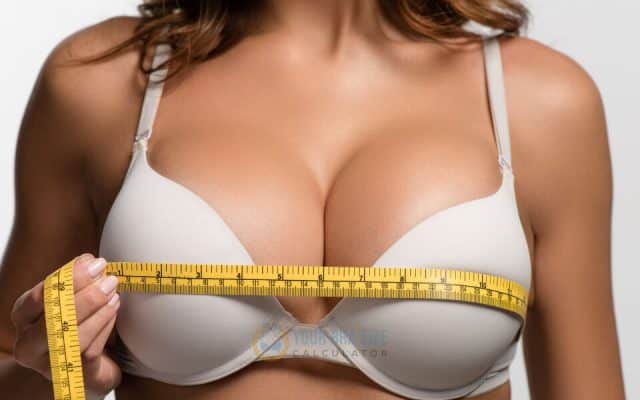
Band size comes from wrapping the tape snugly around the ribcage directly under the bust, keeping it level and parallel to the floor all the way around. Round the result to the nearest whole number, and round up if it lands on an odd number, since most bra bands are sized in even numbers.
Band size is the number portion of a bra size, like the 34 in 34B. It represents the measurement around the ribcage directly beneath the bust, and it’s what actually holds a bra in place. The straps do far less of that work than most people assume.
A snug band measurement anchors the entire bra size calculation, so it’s worth taking slowly rather than rushing to the cup number. If the tape feels loose enough to slide, pull it in until it sits flat against the skin without pinching.
How Do You Measure Cup Size for a Teenager’s Bra?
Cup size comes from a second measurement, taken around the fullest part of the bust while keeping the tape level and not pulled tight. That number, compared against the band measurement, is what determines the letter in a bra size.
This is also where sister sizing comes in: a 32C and a 34B share almost the same cup volume even though the numbers look different, because band and cup size move together in fixed steps. Understanding that relationship helps explain why two sizes can both feel like a reasonable fit for the same body.
How Do You Calculate Cup Size from the Two Measurements?
Subtract the band measurement from the bust measurement, and the difference in inches maps directly to a cup letter. A one-inch difference is an A cup, a two-inch difference is a B cup, and so on up the alphabet.
| Bust Minus Band (inches) | Cup Size |
| 0″ | AA |
| 1″ | A |
| 2″ | B |
| 3″ | C |
| 4″ | D |
| 5″ | DD / E |
| 6″ | DDD / F |
The formula never changes with age. What changes for a teenager is how often the numbers do.
Why Do Teen Measurements Change So Often?
Band and bust measurements shift for teens because rib cage growth and breast tissue development don’t follow a fixed schedule, so the same girl might need a new size every few months during an active growth stretch. That’s normal, not a sign anything was measured wrong the first time.
In a study of nearly 4,000 girls, the median age at which breast development began was 10.19 years, according to a cohort study published in the National Library of Medicine, 2010.
Growth doesn’t stop at that first measurement. It’s common for a band size to change even faster than a cup size during the early teen years, which is exactly why the re-measuring habit matters as much as the first correct number.
What Are the Most Common Measuring Mistakes for Teens?
The two mistakes that throw off a teen’s measurement most often are measuring over a padded bra and pulling the tape too tight out of self-consciousness about the number. Both push the result smaller than the body actually is, which leads straight to a bra that pinches.
A tape measure doesn’t judge. It just needs an honest, relaxed read.
For a broader look at the sizing errors that trip up shoppers of every age, our guide to common bra selection mistakes covers the ones worth watching for beyond measuring day.
A few visible fit signals can also confirm whether a size is working before a teen commits to wearing it all day. The table below maps the most common complaints to their usual fix.
| What You Notice | What It Usually Means |
| Band rides up in the back | Band is too loose; try tightening the hooks or sizing down the band |
| Straps dig into the shoulders | The band isn’t doing enough of the work; check band fit before adding padding |
| Gaping at the top of the cup | Cup is too large; try a smaller cup or a different style |
| Spilling over the top of the cup | Cup is too small; try one cup size up |
For a longer walkthrough of these fit problems and how to fix each one, this guide to gaping, spillage, and slipping straps goes into more detail.
What If a Teen’s Measurement Falls Between Two Sizes?
Landing between two sizes is common, especially for a body that’s still growing, and sizing up on the band is usually the more comfortable choice. A slightly looser band gives a little room without sacrificing support the way a too-small cup does.
Trying the sister size can also help here. If a 32C feels close but not quite right, a 34B has nearly the same cup volume on a slightly larger band, which sometimes solves a fit problem that neither straight size did on its own.
Should a Teen Get a Professional Fitting Instead of Measuring at Home?
A home measurement is a great starting point and often all that’s needed, but a professional fitting adds a visual check that a tape measure alone can’t provide, especially for a body that doesn’t match standard proportions yet. Neither one replaces the other; they work best together.
If it’s been a while since the last check, our guide on how often to get a bra fitting walks through what a fitting actually involves and how to know when it’s time for one.
For guidance that goes beyond measuring numbers, including shopping tips and style choices for a first bra, our full teen bra fitting guide covers the parts of the process that happen after the tape measure comes off.
How Often Should You Re-Measure a Growing Teen?
Every three to four months is a reasonable default during active growth years, and it’s worth re-measuring sooner if a bra suddenly feels tight, loose, or uncomfortable in a new way. Waiting for visible discomfort means the wrong size has already been worn for a while.
Curious what average sizing looks like at a specific age? Our breakdown of average bra size for a 15-year-old puts these measurements in context, though remember averages are a reference point, not a target.
Once you have both numbers, plug them into our bra size calculator to double-check the result, and cross-reference the letters against our guide to what bra size numbers and letters actually mean if any of the terminology still feels unfamiliar.
Getting Comfortable with the Process
Measuring for a first bra, or a fifth one, doesn’t have to be a production. Two numbers, a soft tape measure, and about five minutes of privacy are genuinely all it takes, and getting it slightly wrong the first time isn’t a big deal since teen bodies keep changing anyway. The goal isn’t a perfect number forever. It’s a comfortable fit right now, with an easy way to check again in a few months.
For a quick way to confirm the fit once a new bra is in hand, this guide on how to tell if your bra fits correctly is a helpful next step.
Frequently Asked Questions
What age should a girl start measuring for a bra?
There’s no set age. Measuring makes sense as soon as breast development starts causing noticeable changes, soreness, or self-consciousness, which can happen anywhere from around 9 to 13 years old. The right time is when it’s needed, not when a calendar says so.
Can a teenager measure her own bra size accurately?
Yes, with a soft tape measure and a bit of practice, most teens can measure themselves accurately at home. Having a parent or trusted adult double-check the band measurement helps, since it’s easy to misjudge tightness on your own back.
What if the band and cup measurement don’t match a standard size?
That’s common, and rounding the band to the nearest even number usually resolves it. If the fit still feels off after that, trying a sister size or a different brand often solves what the raw numbers alone can’t predict.
Is it normal for a teen’s bra size to change every few months?
Yes, this is completely normal during active growth years. Re-measuring every three to four months, or sooner if a bra starts feeling wrong, keeps up with a body that’s still developing rather than waiting until discomfort forces the issue.
Should teens use the same measuring method as adults?
The core method, band around the ribcage and bust around the fullest point, is the same at any age. The main difference for teens is the frequency of re-measuring and a bit more patience with sizes that don’t feel fixed yet.