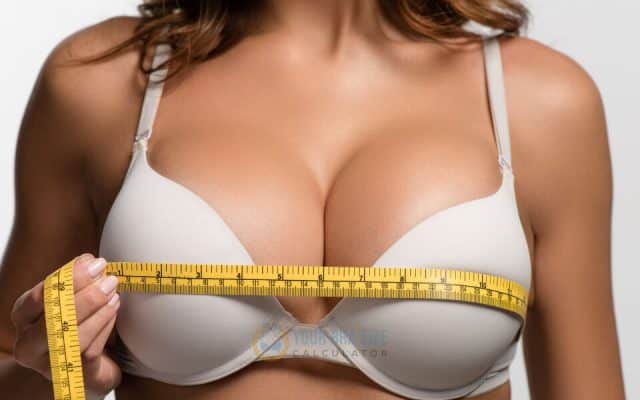
How to Tell If Your Bra Fits Correctly
You can usually tell something is off before you can name it. The band creeps up your back by mid-morning. One shoulder aches more than the other by the time you sit down for lunch. You tug the center of your bra back toward your sternum every time you catch yourself in a mirror. None of that is random, and none of it is just “how bras feel.”
A bra that actually fits does a specific, physical job: it holds breast tissue in place without you having to think about it. When it’s doing that job, you stop noticing it’s there. When it isn’t, your body starts sending you small, specific signals, and most of those signals point to one of three places: the band, the cups, or the straps.

Key Takeaways
- The band, not the straps, does most of the structural work of a bra. If a bra fails, check the band tension first.
- A properly fitting cup contains all of your breast tissue smoothly, with no spillage at the top, no gapping at the edges, and no wrinkling in the fabric.
- Common complaints like straps digging in, band riding up, or underwire poking almost always trace back to a specific, fixable sizing issue rather than “just how bras are.”
- Research shows women are only about half as accurate at self-identifying bra fit problems as they think they are, which is why checking specific physical markers matters more than trusting how a bra “feels.”
- Fit signals differ by bra type. What counts as correct fit in an everyday underwire bra isn’t always the standard for a wireless bralette, a sports bra, or a post-surgical soft-cup bra.
- You can check most fit markers without a mirror or a fitting room, using the two-finger band test and the scoop-and-swoop cup check.
What Does It Actually Mean for a Bra to “Fit”?
A bra fits when the band sits level and snug around your ribcage, the cups fully contain your breast tissue without gapping or spilling, and the straps stay in place without digging in or slipping. Fit isn’t one measurement. It’s the coordination of all three parts working together, which is exactly why a bra can be the right cup size and still fail if the band is wrong, or vice versa.
Floating gore: the center panel of the bra, where the two cups meet, often called the gore. On a well-fitted underwire bra, the gore should lie flat against your sternum between your breasts. When it “floats” off your chest instead of sitting flush, the cups are almost always too small for the amount of breast tissue you’re putting into them, a distinction closely related to sister sizing, since going up a cup and down a band by one size often fixes a floating gore without changing your overall volume.
If you’re not sure where your current measurements fall, our bra size calculator gives you a starting band and cup size in under a minute, which makes it much easier to tell whether what you’re feeling is a fit problem or a sizing problem.
How Do You Know If the Band Fits?
The band should sit level around your ribcage, parallel to the floor, on the loosest of its hooks when the bra is new. If you can pull the band more than an inch away from your back, or if it rides up toward your shoulder blades over the course of a day, it’s too big. Most of a bra’s structural support comes from this horizontal anchor around your ribs, not from the straps stretching over your shoulders, which is why band fit deserves the first check whenever something feels wrong.
The two-finger test is the fastest way to check it: fasten the band on the loosest hook and slide two fingers underneath, along your back. If they slide in with room to spare, size down. If you can’t fit them in at all, or the band leaves deep marks the moment you take it off, size up. Fasten on the loosest hook on purpose, because bands stretch out with wear, and starting loose gives you two or three tighter hooks to move to as the elastic relaxes over the life of the bra.
“If your band rides up in the back before lunch, that’s not a strap problem. That’s the band telling you it’s carrying less of the load than it should be, and something else, usually your shoulders, is picking up the difference.”
Underband tension matters enough that it shows up in exercise physiology research, too. A 2024 study in Medicine & Science in Sports & Exercise found that runners wearing a sports bra with a tight underband used about 1.3% more oxygen at a given pace than the same runners wearing a properly loosened band, a small but measurable metabolic cost from a band that’s simply too snug. The takeaway carries over to everyday bras: tighter isn’t automatically better support, it’s just more restriction.
How Do You Know If the Cups Fit?
Cups fit correctly when your breast tissue fills the cup smoothly with nothing spilling over the top or sides, and nothing pulling away from the fabric in wrinkles or gaps. Spillage at the top or sides of the cup means the cup is too small for the volume you’re putting into it, even if the band feels fine. Wrinkling or a gap between fabric and skin, especially near the top of the cup, usually means the opposite: the cup is too big and has room it shouldn’t.
Underwire placement is a fast diagnostic on its own. The wire should sit flat against your ribcage, fully encircling breast tissue without resting on it. If the wire digs into the side of your breast or sits up on tissue instead of around it, the cup is too small and the wire has nowhere else to go. A common, if unglamorous, term for what happens next is quad boob, where a too-small cup creates a second bulge above the actual cup line, usually paired with a gore that won’t sit flat and a band that’s working overtime to compensate.
“A cup that fits doesn’t announce itself. You should be able to lift your arms overhead without the band riding up or the cups gapping, and forget you’re wearing it within a few minutes of putting it on.”
How Do You Know If the Straps Fit?
Straps fit when they stay put on your shoulders without slipping and without leaving red grooves in your skin by the end of the day. Straps play a secondary, stabilizing role, mostly keeping the cups oriented correctly rather than carrying the bulk of your breast weight, so if you’re constantly tightening them just to stop sagging, the band or cup size is usually the real issue, not the strap adjustment.
If straps dig in no matter how loose you set them, the band is likely too loose and is letting your straps do work the band should be doing. If you want the mechanics of that trade-off in more detail, our guide to bra fit issues like gaping, spillage, or slipping straps walks through each symptom individually.
Signs Your Bra Doesn’t Fit, and What to Do About Each One
Different fit problems point to different fixes, and most of them are one adjustment away from solved. Use this as a quick reference the next time something feels off but you can’t quite place why.
| Symptom | Likely cause | What to try |
| Band rides up in the back | Band is too big or has stretched out | Move to a tighter hook, or size down the band |
| Straps dig into shoulders | Band is too loose, so straps carry extra weight | Check band fit first, then adjust straps |
| Breast tissue spills over the top or sides | Cup is too small | Size up the cup, keep the band the same |
| Cup fabric wrinkles or gapes | Cup is too big | Size down the cup, keep the band the same |
| Underwire digs into breast tissue | Cup is too small, wire has nowhere to sit | Size up the cup or try a different wire shape |
| Center gore floats off the sternum | Cup is too small for the tissue volume | Try sister sizing: cup up, band down |
| Band leaves deep marks immediately | Band is too tight | Loosen to the middle or loosest hook |
Does Correct Fit Look Different by Bra Type?
Yes, and this is where a lot of general fit advice falls short. The signals that mean “correct fit” in a structured underwire bra don’t always transfer cleanly to a wireless bralette, a sports bra, or a soft-cup bra worn after surgery, and applying underwire rules to a non-underwire bra can lead you to size incorrectly.
| Bra type | What correct fit looks like |
| Everyday underwire | Gore lies flat, wire encircles tissue without pressing on it, band is level and snug |
| Wireless or bralette | No wire placement to check, so focus on band tension and whether the cup seam sits smoothly without a hard edge |
| Sports bra | Minimal bounce during movement, band stays put under arm-raise, no restriction severe enough to affect breathing |
| Post-surgical or soft-cup | Gentle, even compression with no pinching at scars or incision lines, front closure if reaching overhead is limited, guided by your surgeon’s specific timeline |
That last row matters enough to flag clearly: fit expectations after breast surgery, whether augmentation, reduction, or mastectomy, depend on your specific procedure and healing timeline. Fabric, front-closure design, and gentle compression are reasonable things to discuss, but wearing a bra during recovery is a conversation to have directly with your surgeon or care team, not something a general fit checklist should override.
Can You Tell If a Bra Fits Without Trying It On?
To a point, yes, especially once you already know your measurements. If you know your band and cup size and the bra’s sizing chart matches it, you can predict a reasonable fit before you ever put it on, though brand-to-brand variation means it’s still a prediction rather than a guarantee.
For a bra you’re already wearing, the scoop-and-swoop method checks cup fit in seconds: lean forward, use your hand to sweep breast tissue up and into the cup from the side, then stand upright and check whether everything sits inside the cup without spilling or gapping. It’s also worth doing an end-of-day check rather than judging fit the moment you put a bra on. Look at the marks the band and straps left on your skin after several hours of normal movement. Faint, temporary lines are typical of most bras. Deep, lasting grooves are a sizing signal, not something to push through.
Why “It Feels Fine” Isn’t the Same as “It Fits”
A 2025 study in the International Journal of Fashion Design, Technology and Education found that women’s own reports of whether their bra fit matched an objective, criteria-based fitting assessment only 51% of the time, roughly a coin flip. Source: Haworth et al., 2025.
That gap is exactly why checking specific markers, band tension, cup fill, gore placement, matters more than trusting a general sense of comfort. A bra can feel unremarkable and still be doing the wrong job, particularly if you’ve been wearing the same size for years without rechecking it.
How Much Difference Does Correct Fit Actually Make?
A well-fitted, well-designed bra measurably changes how much your breast tissue moves during the day. Research published in Ergonomics tested 98 sports bras and found breast movement reduction ranged from 36% to 74% depending on design and fit, with features like an adjustable underband and encapsulated cups accounting for a large share of that difference. Source: Norris et al., 2021. The same underlying mechanics, a snug band and cups that fully contain tissue, apply to everyday bras, even though the movement involved during a normal day is far less than during running.
Fit also interacts with posture. Breast tissue is supported almost entirely by skin and Cooper’s ligaments, which weren’t built for sustained load-bearing, so a bra that redistributes that weight through the band and torso is doing real mechanical work, not just cosmetic smoothing.
If shoulder or upper-back discomfort is part of what’s bringing you here, our guide to bra size and back pain goes deeper into that connection specifically.
When Is It Worth Getting a Professional Fitting?
A professional fitting is worth booking any time you’ve gone through this checklist and still aren’t confident in the result, after a significant weight change, after pregnancy or breastfeeding, or after any breast surgery. A fitter can assess asymmetry, unusual proportions, or fit issues that don’t fit neatly into a standard checklist, and can do it faster than trial and error at home.
That said, a fitting isn’t a one-time fix. Bodies and bras both change over time, and how often you should get refitted depends more on how much your body or your bra collection has shifted than on the calendar.
How Often Should You Recheck Your Fit?
A good general rule is to recheck fit anytime your weight shifts by more than a few pounds, after pregnancy or while breastfeeding, during the growth spurts of the teen years, and any time a bra you’ve worn comfortably for months suddenly starts riding up or digging in. Elastic degrades with washing and wear even if your body hasn’t changed at all, so a band that fit perfectly a year ago can simply be worn out.
If you’re not sure whether a change in fit is about your body or about the bra itself, this breakdown of how bra size changes with weight and our guide to bra sizing numbers and letters are both useful starting points before you buy anything new.
The Bottom Line
Fit isn’t something you either have a knack for or don’t. It’s a short, specific checklist: a level band that stays put on the loosest hook, cups that fully contain tissue without gapping or spilling, and straps that stay in place without carrying weight they shouldn’t. Once you know what to check and where, most fit problems turn out to be one adjustment away from solved, not a sign you have a difficult body to dress.
If you haven’t measured recently, start with the calculator, and use the checks above the next time you try something new. Most fit surprises get a lot less surprising once you know exactly what you’re looking for.
Frequently Asked Questions
How do I know if my bra band is too small?
A band that’s too small leaves deep, immediate marks on your ribcage, feels restrictive when you take a full breath, and often pushes tissue up toward your armpits or forward into the cups. If you can’t comfortably fasten the loosest hook without straining, size up the band before adjusting anything else.
Why does my bra ride up in the back?
A band that rides up is almost always too big. The band has stopped anchoring against your ribcage and is instead getting pulled upward by the weight of the cups, especially during movement. Moving to a tighter hook or sizing down the band usually solves it immediately.
Can a bra fit differently depending on the brand?
Yes, sizing isn’t standardized across manufacturers, so a 34C in one brand can fit noticeably differently than a 34C in another, particularly in cup depth and gore width. Your measured size is a reliable starting point, but it’s still worth checking band and cup fit individually with any new brand rather than assuming the label guarantees the result.
Is it normal for a sports bra to fit tighter than an everyday bra?
Some added snugness is expected in a sports bra, since it’s designed to limit movement during activity, but tighter should never mean restricted breathing or painful pressure. If a sports bra leaves you short of breath or in pain, it’s too tight rather than simply supportive, and a looser band with better cup containment is usually the better trade-off.
How do I know if a bra fits without a mirror?
Use touch and movement instead of sight. Slide two fingers under the band to check tension, run a finger around the top edge of each cup to feel for spillage or gapping, and raise both arms overhead to see whether the band stays anchored. If everything holds steady through that sequence, the fit is very likely correct.