Bra Fitting for Nursing Mothers: Sizing and Fit From Pregnancy Through Postpartum
The nursing bra you bought at 34 weeks can feel wrong by the end of your first week at home. The band that hugged your ribs sits looser, the cups that fit on Tuesday overflow by Thursday, and the clip that opened with one hand now takes two. A nursing bra has to fit a body that changes with pregnancy, milk supply, and the hour of the day, and most sizing advice treats that body as if it stays still. This guide covers when to measure, what to buy early, what to wait on, and how to read a fit problem so you can fix it with the bra you already own.
Key Takeaways
- Cup size can change by anywhere from none to several sizes during pregnancy and nursing, so rules that add a fixed number of sizes are unreliable.
- The first week after birth is a poor time to measure, because swelling from milk coming in usually appears around days 3 to 5.
- Buy one or two stretchy nursing bras late in pregnancy, then buy more once feeding settles and your size stops swinging from day to day.
- Cup size changed more often than band size in one survey, so a stretch cup and a band with several hook settings give you the most room.
- A symptom check, such as a riding band, wrinkled cups, spilling, or wire pressure, tells you what to change faster than a size chart.
- Pain, a hot red patch, or a fever belongs with your doctor or lactation consultant, because a different bra won’t resolve it.
What makes a nursing bra fit differently from a regular bra?
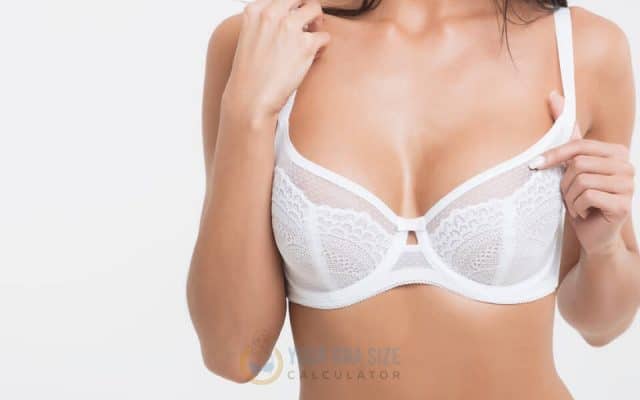
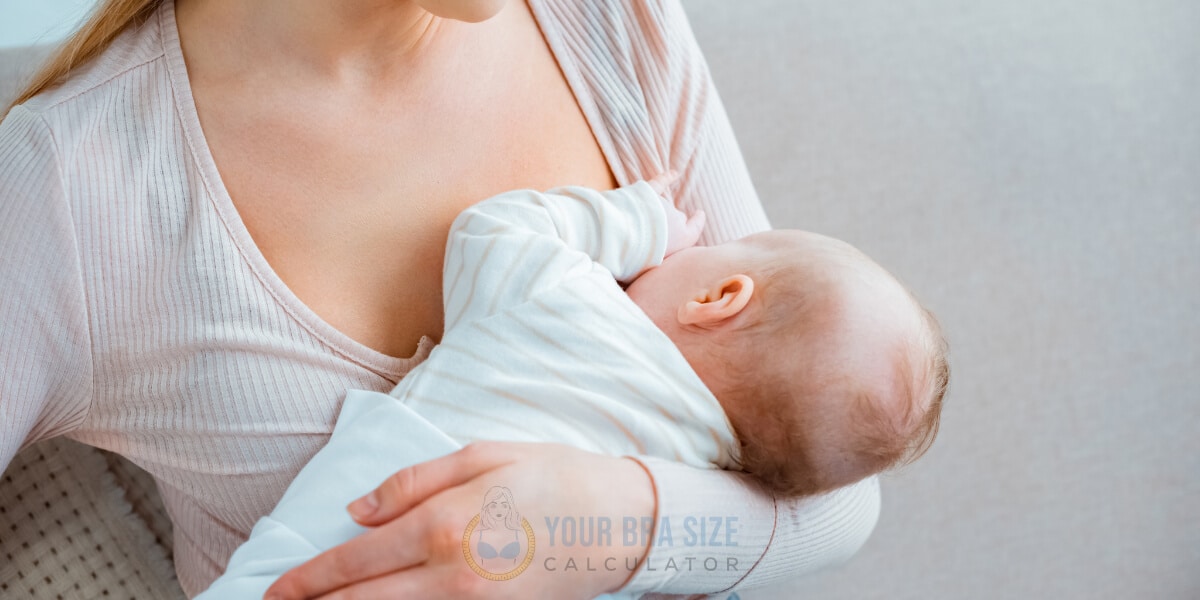
A nursing bra fits like a regular bra at the band and the cup, but it also has to open for feeding and stretch with changes in breast size. You judge it on two tests at once: how it supports your breasts when closed, and how it behaves when a cup is open or folded down. A bra that passes only the first test tends to frustrate you by week two.
Nursing bra: a bra with cups that open, fold down, or slide aside so a baby can feed without the bra coming off, built with stretch fabric or adjustable parts to allow for the size changes that come with pregnancy and lactation.
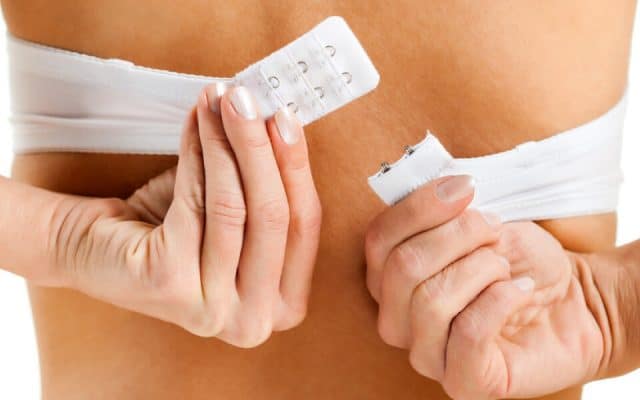
A band that stays level across your back gives the cups and straps a stable base, so a snug band matters here as much as in any bra. The cups are where a nursing bra departs from the usual design. Stretch cups and drop-cup openings give up some of the shape of a molded cup in return for room, which lets the bra fit a breast that’s fuller after a long gap between feeds and softer right after one. Features including a band with several hook settings, a bra extender, and a one-handed clip exist because both the band and the cups shift over a few months. If you need the basics of band and cup first, the bra size calculator and the guide to calculating band and bust size walk through them.
How much does your bra size change during pregnancy and nursing?
Cup size changed for 74% of the 1,030 breastfeeding mothers in one online survey, by anywhere from one to four full cup sizes, according to Zhang and Barbour (2022). The range runs from no change at all to several sizes, so no single rule predicts where you will land.
74% of 1,030 breastfeeding mothers surveyed reported a change in cup size, anywhere from 1 to 4 full cup sizes. Source: Zhang and Barbour, ITAA Annual Conference Proceedings, 2022
Breast volume averaged 420 mL at the start of pregnancy and 516 mL at the end, a mean increase of 96 mL. Source: Bayer et al., European Journal of Cancer Prevention, 2014
13.6% of mothers in a Perth lactation cohort reported no noticeable breast growth, while 7.7% had an increase of more than 400 cm3, based on the bra sizes they reported. Source: Jin et al., Nutrients, 2024
Scans of pregnant women point the same way. Women followed from week 12 to birth gained 96 mL on average, but not every woman’s breasts responded to pregnancy in the same way, according to Bayer and colleagues (2014). Milliliters don’t convert neatly into cup letters, so use that figure as a sense of scale only.
Band size moves too, though less often. Over half of the mothers in the Zhang and Barbour survey reported a band change, compared with 74% who reported a cup change. That pattern is why a stretch cup and a band with several hook settings give you more room than a fixed size does. Rules of thumb that add a set number of cup sizes circulate widely, but the survey and scan data show a spread of outcomes, so a fixed rule will miss for many people. The article on how pregnancy and breastfeeding affect bra size covers those changes in more detail.
Choose cups for your fullest hour of the day and let stretch handle the rest.
When should you get measured for a nursing bra?
Measure in stages instead of once. Retailer advice on timing varies, but much of it points to a first nursing bra in the last weeks of pregnancy and a second round once feeding settles. The table below shows what tends to change at each stage and what to do about sizing at that point.
| Stage | What tends to change | What to do about sizing |
| Early to mid pregnancy | Your everyday bra starts to feel snug at the band or the cups. | Keep wearing what fits, add a band extender if the band is tight, and hold off on a nursing purchase. |
| Second to third trimester | Breast volume and band size keep shifting. | Measure again with the calculator and try a stretchy maternity or wire-free style. |
| Last weeks before birth | Your size is closer to where early nursing starts, though it can still move. | Buy one or two stretch nursing bras and fit them on the loosest hook that still feels secure. |
| Days 3 to 5 after birth, or later after a cesarean | Milk coming in brings firm, swollen breasts on both sides. | Wear a soft stretch bra and skip the tape measure for now. |
| Feeding established | Fullness shifts between feeds, and the day-to-day swing narrows. | Measure again, buy for your fullest reading, and add daytime styles. |
| Weaning or cutting back | Fullness often shifts as feeds drop. | Measure again and move back toward regular sizing as your size settles. |
A bra bought in late pregnancy only has to cover the first weeks of feeding, so a soft stretch style on a forgiving hook does the job better than a structured bra you’d have to get right on the first try. If you’re in the second trimester and still sorting out how to measure, the guide on how to measure bra size when pregnant covers that stage in detail. The later rounds of buying matter more, because that’s when your size has settled enough to trust.
Why is the first week after birth a poor time to measure?
Swelling from milk coming in changes your size from one day to the next. Postpartum engorgement usually appears between days 3 and 5 and can arrive as late as days 9 to 10, and a cesarean birth is associated with a later start, according to the Academy of Breastfeeding Medicine’s Clinical Protocol #36 (Mitchell et al., 2022).
Engorgement presents as firmness and swelling in both breasts, so a tape measure reading in that window reflects swelling that’s still changing. A soft stretch nursing or sleep bra with plenty of give is the practical choice for those days, and the real fit check can wait until feeding settles. The same protocol says lactating breasts can feel lumpy and sometimes painful when nothing is wrong, and it advises a medical evaluation when systemic symptoms such as fever last more than 24 hours. A hot, red, painful area or a fever that lasts more than a day is a reason to call your doctor or lactation consultant, because a different bra won’t resolve either one.
How do you measure for a nursing bra at home?
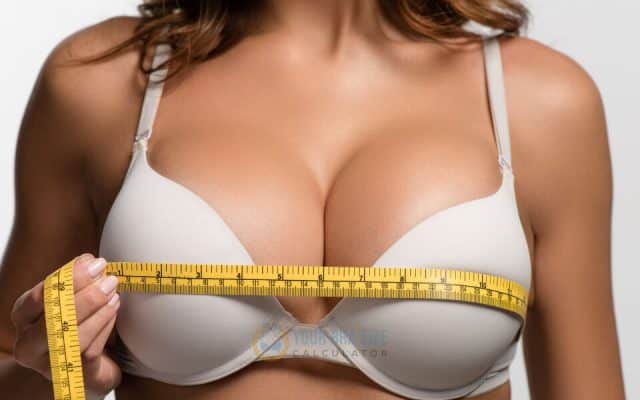
Measure the band snugly around your ribcage just under the bust, then measure around the fullest part of your bust with the tape level across your back, and compare the two numbers to find your cup. Take the readings when your breasts are fullest, such as before a feed, and again after one, so you can see the range your bra needs to cover.
Wear a thin, non-padded bra with no wire or measure bare, and keep the tape snug without pinching. Run both numbers through the bra size calculator, which converts them into band and cup sizes for your region. If your two readings land in different cups, buy for the fuller one and rely on stretch to take up the difference, because a cup that’s too small causes the spilling and wire pressure people often blame on the style. Breasts also differ in size from one side to the other, so fit the cup to the larger side. If your band reading falls between two sizes, choose the larger band and use an extender if needed.
How should a nursing bra fit when you try it on?
The band sits level across your back with room for one or two fingers, the cups hold your whole breast without wrinkling or spilling, and the straps carry weight without digging. Then you test what regular bras skip: open each cup with one hand and check that the clip moves without pulling the band out of place.
| What you notice | What it usually means | What to try |
| The band rides up your back | The band is too loose or has stretched, or the cups are too small and pull it upward. | Move to a tighter hook. If it still rides up on the tightest hook, go down a band size and up a cup letter. |
| Breast tissue bulges over the top or side of the cup | The cup is too small for your fullest point. | Go up a cup size or choose a stretch style that expands. |
| The cup wrinkles or gapes at the top | The cup is too large for how full you are right now. | Measure after a feed, and choose a stretch cup instead of buying several of the same size. |
| The wire presses on the side of the breast or sits on tissue | The cup is too small, or the wire shape doesn’t suit your breast. | Try the next cup size or a wire-free style, and ask a lactation consultant if tenderness lasts. |
| The straps dig into your shoulders | The band is too loose, so the straps carry too much weight. | Tighten the band first, then adjust the straps. |
| The clip pulls the cup out of place or takes two hands | The band or cup is too tight at the clip, or the clip style doesn’t suit your shape. | Check size first, then choose a style with a strap clip you can open with one hand. |
Sister sizing helps when the band has to change but the cup volume shouldn’t: going down one band size and up one cup letter keeps a similar cup volume on a tighter band. Try the bra on with nursing pads in place if you plan to use them, because pads add bulk inside the cup and can turn a good fit into a tight one. For a wider look at these fixes, see how to deal with bra fit issues such as gaping, spillage, and slipping straps and how to tell if your bra fits correctly.
Which features matter most when your size keeps changing?
Stretch in the cups, a band with several hook settings, and a clip you can open with one hand matter most, because those three features cover the usual gap between a fixed size and a changing body. The remaining features, including fabric and seam placement, matter for comfort once those are in place.
Wire-free styles remove one common fit problem, since a wire that rests on breast tissue instead of around it presses wherever the cup is too small. They also tend to tolerate changes in size better, which suits these months, and the guide to wire-free bras covers how they compare. Underwire nursing bras exist and suit some people who want more structure, though they leave less margin when your size shifts.
Support still matters. The Academy of Breastfeeding Medicine’s 2022 protocol recommends an appropriately fitting, supportive bra during lactation, noting that lactating breasts are highly vascular and need support to avoid dependent lymphedema, a fluid swelling, along with progressive back and neck pain, according to Mitchell and colleagues. The protocol assigns that recommendation the lowest of its three evidence levels and the lowest of its three recommendation strengths, so treat it as a sensible default that the evidence only lightly supports. For night feeds, many mothers prefer a soft wire-free sleep style, and the article on wearing a bra to bed when breastfeeding covers that choice. Soft, breathable stretch fabric helps when skin is tender, and flat seams that stay away from the nipple area reduce rubbing. A nursing sports bra is a separate category for exercise and is worth adding once your size settles.
The most useful feature in a nursing bra is room for your size to move.
How many nursing bras do you need, and which ones come first?
Most mothers in one survey bought between one and five nursing bras while breastfeeding, so a small, staged purchase matches typical use. In that survey, 70% of 875 participants bought one to five nursing bras, according to Zhang and Barbour (2022). Buy one or two before the birth and the rest after your size settles.
Start with a soft stretch nursing bra for the hospital bag and a second for rotation, so one is always clean and dry, and add a sleep style if you feed at night. Once feeding settles and the gap between your before-feed and after-feed readings narrows, measure again and buy the structured or wired styles you want for daytime.
When should you ask a professional about fit?
Ask a certified fitter when your size stays unclear after two measurements, and ask a lactation consultant or doctor when breast pain, redness, or fever shows up, since a different bra won’t fix those. A fitter can see how a cup sits on your actual shape, which a tape measure can’t, and many lingerie shops offer fittings for nursing bras. A lactation consultant can assess feeding pain and positioning, which a bra doesn’t address. If you’ve had breast surgery, your surgeon or care team should guide timing and the level of support.
What should you do this week?
Find your stage in the table above and take only that step, whether that’s a soft stretch bra for the first week or a fresh measurement once feeding settles. Your size will keep moving for a while, so a fresh measurement a month from now is routine.
Frequently Asked Questions
What size nursing bra should I buy?
Buy the size that fits your fullest reading of the day, using the larger side and the calculator on your measurements. Because cup change in surveys ranged from none to four sizes, no formula gives a safe size in advance, so stretch cups and an adjustable band matter more than getting the letter right. In late pregnancy, buy one or two and keep the receipt in case you need to exchange them.
How do I measure for a nursing bra?
Measure snugly around your ribcage under the bust for the band, then around the fullest part of your bust for the cup, with the tape level. Take readings before and after a feed to see your range, and enter them in the bra size calculator. Avoid measuring during the first week after birth, when swelling changes your size from day to day.
Should I buy nursing bras before the baby arrives?
One or two are enough, bought in the last weeks of pregnancy in a stretchy style with an adjustable band. Your size can still change after the birth, so wait on the rest until feeding settles. In one survey, 70% of 875 mothers bought one to five nursing bras in total, according to Zhang and Barbour (2022).
How do I know if my nursing bra fits?
The band stays level without riding up, the cups hold all your breast tissue without wrinkling or spilling, and the straps stay put without digging in. The clip should open with one hand without shifting the band. If any of those fail, check the symptom table above before buying a new size.
Is a nursing bra size the same as a regular bra size?
Many nursing bras use the same band and cup sizing as regular bras, while stretch styles often use broader sizes such as small, medium, and large that cover a range of cups. Sizes also vary between brands, so use your measurements as a starting point and try the bra on if you can.