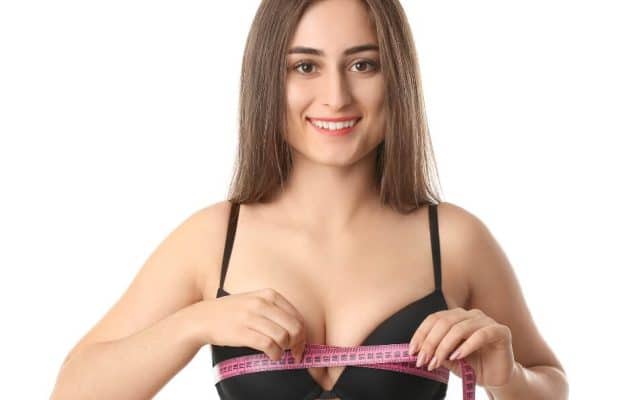
How To Find a Bra That Flatters Your Body Type
Most advice on finding a bra for your body type starts by sorting you into a shape such as pear, apple, hourglass, or rectangle, then hands you a list of styles. That list skips the part you notice first: the cup that spills at the top, the band that creeps up your back, or the strap that slides off your shoulder. Those problems come from fit, and a label based on your hips and waist can’t solve them.
Silhouette labels describe proportions such as shoulder, waist, and hip width, while a comfortable bra depends on factors including band tension, cup volume, and breast shape. This guide starts with size and breast shape, then brings in your silhouette for finishing choices such as neckline and strap style.

Key Takeaways
- A measured size comes first, because a band or cup that is off changes the line under your clothes more than a change of style does.
- Silhouette labels help with necklines and strap placement, and breast shape and volume guide the choice of cup style.
- A cup letter doesn’t stand for one fixed volume, so trying a neighboring band size is a normal part of fitting.
- Problems including spilling, gaping, riding up, and slipping each point to a specific feature to try next.
- Sloped shoulders, wide-set or close-set breasts, and torso length change which strap and center panel designs hold well.
- Body changes including weight, pregnancy, nursing, and surgery can shift your size, and pain or other symptoms belong with your doctor or a certified fitter.
What Does a Flattering Bra Look Like on Your Body?
A flattering bra keeps breast tissue inside the cups, sits flat against your ribcage, and leaves a smooth line under your clothes. Those three results come from fit more than from style, which is why two people with the same silhouette can look quite different in the same bra. The look you want, such as lifted, rounded, minimized, or natural, is a styling choice that sits on top of a good fit.
Silhouette: the proportions of your frame, including shoulder, waist, and hip width, often described with labels such as pear, apple, hourglass, rectangle, and inverted triangle. Shopping guides use “body shape” and “body type” to mean silhouette.
Breast shape: how breast tissue sits on your chest, including fullness at the top and bottom, the width of the base, how far the breasts project, and how far apart they sit.
Keeping those two ideas apart makes the rest of this guide easier to use, because silhouette changes how a bra looks with your clothes and breast shape changes how the cup behaves.
Why Does Bra Size Come Before Body Type?
Size comes first because every style recommendation assumes the band and cup already fit. A band that rides up or a cup that spills changes the line under clothing more than the difference between a balconette and a plunge does. If you haven’t measured recently, a bra size calculator gives you a starting size, and measuring your bra size at home explains how to take the measurements.
A cup letter describes the gap between your bust and underbust measurements and does not stand for a fixed amount of breast tissue, which is why band size and cup volume have to be read together.
Breast volume varies within a single bra size, and one cup letter holds different volumes at different band sizes. Researchers measured the breast volume of 104 women by water displacement and compared it with each woman’s professionally fitted size, finding volumes from 125 ml to 1,900 ml across the sizes in the sample (McGhee and Steele, International Journal of Clothing Science and Technology, 2011; sizes reported in Australian sizing).
This is the reason sister sizing exists. As general guidance, moving down one band size and up one cup letter, such as from 34C to 32D, is intended to keep cup volume similar while tightening the band, and the reverse loosens it. That example is illustrative. Brands and regions size differently, and US, UK, and EU labels are not interchangeable, so treat any sister size as a starting point to try on rather than a true equivalent.
The guide to bra sizing for different body types covers measuring across different frames in more detail.
Do Labels Like Pear and Hourglass Help You Choose a Bra?
They help with how a bra looks under clothes, and they say little about how it fits. Silhouette labels describe proportions such as shoulder, waist, and hip width, so they suit decisions such as necklines, strap placement, and visual balance, while the breast factors that decide cup fit sit outside what they measure.
Body labels divide people unevenly, and the split depends on the scheme used. In an analysis of 300 European 3D body scans using predefined chest, waist, and hip width ratios, researchers placed 49% in a “spoon” shape, 30% in a “bottom heavy hourglass,” 11% in an “hourglass,” and 5% in a “rectangle” (Webster, Cornolo, and Kelkel, 3rd International Conference on 3D Body Scanning Technologies, 2012).
That result comes from one sample and one set of researcher-defined categories, so it doesn’t describe everyone. It does show that labels such as pear, apple, hourglass, and rectangle are one way of slicing a body among several, which is one reason a single label rarely settles a bra decision.
The table below lists styling ideas people often pair with each silhouette. It is general styling guidance and not a fit rule, and wearing a style because it feels comfortable is a good enough reason to choose it.
| Silhouette | What the label describes | Features people often try for visual balance |
| Pear | Hips wider than shoulders and bust | Lightly lined or molded cups that add a little shape up top, in a smooth, rounded cut |
| Apple | More fullness through the midsection | Wider, smooth bands and cups that stay flat under knit fabrics |
| Hourglass | Shoulders and hips similar, with a defined waist | Most cuts work, so neckline and comfort usually decide |
| Rectangle | Shoulders, waist, and hips similar in width | Molded, padded, or plunge styles for added curve, or unlined styles for a natural line |
| Inverted triangle | Shoulders wider than hips | Soft, unlined or lightly lined cups with a gentle neckline |
Which Breast Factors Matter More Than Silhouette?
Factors including fullness, base width, projection, and spacing matter more for cup fit than silhouette does. Fullness describes whether tissue sits higher or lower on the chest, base width describes how wide the tissue spreads across the chest wall, projection describes how far it extends forward, and spacing describes the gap between the breasts.
Tissue that sits higher on the chest often spills over a shallow or low-cut cup, while tissue that sits lower often fills a balconette or demi cup without gaping at the top. A full-coverage bra suits fuller tops because the cup reaches higher. Base width decides how wide a cup and underwire need to be, and a wire that rests on tissue instead of beside it often means the cup is too narrow for you.
Spacing changes the center and sides of the cup. Wide-set breasts often sit better in balconette or side-supporting cups, and close-set breasts often suit plunge styles with a lower center panel, the small section between the cups. Volume changes how much structure helps: the guide to the best bras for large busts covers wider bands and fuller cups, and the guide to bra styles for small breasts covers demi, plunge, and lightly lined options.
Breast shape varies across many measurements at once. Researchers used 41 relative measurements from 478 3D body scans of North American women aged 18 to 45 to sort shapes into three or five groups, depending on the criterion applied (Pei, Park, and Ashdown, Textile Research Journal, 2018). The sample was limited to one region and age band, so it shows how many dimensions shape involves and doesn’t rank shapes for everyone.
A bra can be the right size and the wrong cut for your breast shape, which is why a good size in one style doesn’t always carry over to the next.
How Do Shoulders and Torso Length Change Bra Fit?
Sloped shoulders and torso length change where the straps and band sit, so they change which designs stay in place. Sloped shoulders let wide-set straps slide outward, and options including a closer strap placement, a racerback cut, or a convertible strap often hold them in position. The guide to why bra straps keep falling down covers the other causes.
Brands cut bras for an average torso length, so a longer or shorter torso can shift where the band and cups land. Trying two or three cuts is often the quickest way to find one that sits where your tissue does.
Wide, vertical straps reduced discomfort in one sports bra study of women with larger cups. In a laboratory study of 23 active women with D+ cup sizes, straps about 4.5 cm wide caused less discomfort and pressure than standard-width or gel straps, and vertical straps caused less discomfort than cross-back straps (Coltman, McGhee, and Steele, Sports Medicine – Open, 2015). The women ran on a treadmill in sports bras, so the result supports wider straps for exercise comfort and doesn’t settle strap design for every bra.
Which Bra Feature Fixes the Problem You Notice?
The problem you notice usually points to the feature to try next. Spilling over the top of the cup usually means the cup is too small or too shallow for your tissue, while gaping at the top often means the cup is too large or cut for fuller breasts than yours.
The table below pairs six common problems with a likely reason and a first thing to try. It is general guidance, and brands cut bras differently, so treat each fix as something that often helps and not as a guaranteed result.
| What you notice | Likely reason | What to try first |
| Tissue spills over the top or sides of the cup | The cup is too small or too shallow for your tissue | The next cup letter, or a full-coverage or full-cup style |
| The top of the cup gapes or wrinkles | The cup is too large, or cut for fuller tops than yours | A smaller cup letter, or a balconette, demi, or stretch-lace upper cup |
| The band rides up your back | The band is too loose, or small cups pull it upward | A smaller band with a larger cup letter, then recheck the cups |
| Straps dig in or leave grooves | A loose band leaves the straps carrying the load | A smaller band size, and wider straps if needed |
| Straps slide off your shoulders | Sloped or narrow shoulders, or straps set too wide | A racerback, a convertible strap, or closer strap placement |
| The center panel lifts away from your breastbone | The cups are too small, or the panel is too narrow or too high for your chest | A larger cup letter, or a style with a lower or wider center panel |
If discomfort continues after a change in size or style, or you notice pain or changes in your breast tissue, talk to your doctor or a certified fitter.
How Do You Check a Bra’s Fit in the Fitting Room?
Check the band first, then the center panel, then the cups, then the straps, and finally the line under your clothing. Each check depends on the one before it, because a loose band changes how the cups and straps sit. The band should hold the bra in position, and the straps should only steady it.
Fasten a new bra on the loosest hook. The band should sit level across your back and stay in place when you raise your arms, and you should be able to slide a couple of fingers beneath it. The center panel should rest against your breastbone, and the cups should hold tissue smoothly without puckering or spilling. Straps should stay put without digging in, and a fitted top should show a smooth outline.
The guide on how to tell if your bra fits correctly covers the same checks in more depth.
Fit problems are easy to miss when you assess your own bra. In a study of 24 women, every participant failed an objective bra fit assessment, researchers identified 77 fit issues in total, and participants’ own reports matched the assessment in only 51% of instances (Haworth et al., International Journal of Fashion Design, Technology and Education, 2025).
That sample is small, so treat it as a reason to check yourself in a mirror from the side and the back, or to ask a second person, and not as a measure of how common the problem is.
The three rows of hooks exist to tighten a bra as its elastic relaxes, so a new bra that only fits on the tightest hook is often too small in the band.
What Changes Your Fit Over Time?
Changes including weight, pregnancy, nursing, and surgery can alter band and cup fit, so size and shape are worth rechecking whenever your body changes. A bra that fit last year can feel different now for that reason alone.
For nursing and postpartum changes, soft stretch fabrics and front closures are common comfort starting points, and sizing often shifts over weeks, so a fitting is worth repeating. After surgery, comfort basics such as front closures, soft stretch fabrics, and wire-free cups are common starting points, and questions about timing, compression, and wound care belong with your surgeon or care team.
What Should You Do After You Find One That Works?
Cup letters, band sizes, and style names vary by brand, so needing two or three tries is a normal part of buying a bra. When one holds its position, fastens on a comfortable hook, keeps tissue in the cup, and leaves a smooth line, write down details including its size, cup cut, and strap setup, then look for those details in the next one. That short note gives you a reference to carry between brands and a quick way to notice when your fit has changed.
Frequently Asked Questions
How do I know which bra style is right for my body type?
Start with a measured size, then use where your tissue sits and where the bra goes wrong to choose a cup style, and use your silhouette for neckline and strap preferences. The fitting-room check in this guide tells you whether a style works. If two styles both fit, the one you find more comfortable is the better pick.
Does my body type change my bra size?
Silhouette doesn’t set your bra size, because band and cup size come from your underbust and bust measurements. Body changes such as weight or pregnancy can change those measurements, which can change your size. Sizing systems also differ by region and brand, so a calculator result is a starting point.
Which bra suits wide-set or close-set breasts?
Wide-set breasts often sit better in balconette or side-supporting cups, and close-set breasts often suit plunge styles with a lower center panel. Both are common starting points that depend on cup depth and a brand’s cut, so try a couple of styles before settling on one.
Why does the same bra size fit differently in different brands?
Brands cut cups with different depth, width, and stretch, and band tension varies too, so the same label can sit differently on you. Trying neighboring sizes, such as a sister size, helps you find which cut suits your shape.
When should I see a fitter or a doctor instead of changing bras?
A certified fitter can help with sizing and style questions such as spilling, gaping, and slipping straps. Talk to your doctor about persistent pain, a new lump, or changes in the skin or shape of a breast, because a different bra won’t address those. After surgery or during nursing, follow your surgeon or care team’s guidance on timing and compression.