
What Is a Full Coverage Bra?
If your bra leaves a gap at the top of the cup, or tissue spills out at the sides no matter what size you try, the problem usually isn’t your body. It’s the coverage level. Most sizing advice talks about band and cup numbers and stops there, but how much fabric actually sits over the breast changes the fit just as much as those numbers do.
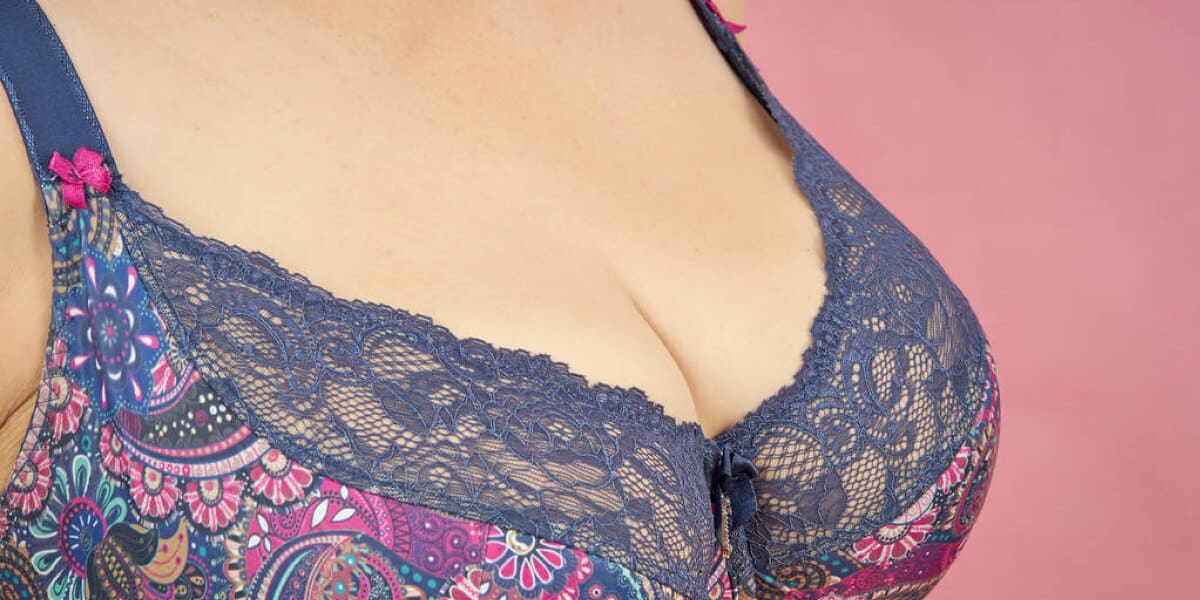
A full coverage bra is built to hold more of the breast inside the cup, from the underwire up over the top of the tissue near the collarbone. That extra fabric isn’t about modesty alone. It changes how weight is distributed, how the bra sits against the sternum, and how much work the shoulders end up doing. Here’s what full coverage actually means, who it tends to suit, and how to tell whether one is genuinely fitting you or just giving the appearance of it.
Key Takeaways
- Full coverage bras enclose most or all of the breast tissue, including the upper pole near the collarbone, which is what separates them from demi and balconette styles.
- More fabric doesn’t automatically mean more support. A full coverage cup still needs the correct band and cup size to do its job.
- Full coverage tends to suit fuller busts and wider-set breast shapes best, but tissue distribution matters more than cup letter alone.
- A gap at the top of the cup or bulging at the underarm means the coverage level is wrong for your shape, not that your body is the problem.
- Full figure bras look similar to full coverage but add reinforced sides and wider straps built for heavier cup sizes.
What Is a Full Coverage Bra?
A full coverage bra is a cup style that encloses nearly all of the breast tissue, including the portion near the collarbone, rather than cutting across it. That’s the core distinction: coverage describes how much of the breast the cup fabric actually contains, separate from band size, cup size, or whether the bra has an underwire.
Full coverage bra: a bra style with cups cut high enough to contain the upper pole of the breast, typically finishing close to the collarbone, in contrast to demi or balconette styles that cut across the upper breast for a lower profile.
This distinction matters because two bras in the exact same band and cup size can fit completely differently depending on coverage. A 34D in a demi cup and a 34D in a full coverage cup hold the same volume of tissue, but the demi lets more of that tissue sit above the fabric line, while the full coverage version contains it. Neither is wrong on its own; they solve different problems.
How Does Full Coverage Compare to Demi and Balconette Styles?
Full coverage sits at the higher-containment end of a spectrum that runs from minimal coverage through demi, balconette, full coverage, and full figure. Each step up generally means more fabric over the upper breast and a wider strap and band to carry it.
| Style | Cup Coverage | Typical Strap Width | Best Suited For |
| Demi | Roughly half the breast; low-cut top edge | Narrow to medium | Fitted or low necklines, close-set breast shapes |
| Balconette | Slightly more than demi; horizontal top line | Medium, wide-set | Lift and shape under structured tops |
| Full coverage | Encloses nearly all breast tissue, including the upper pole | Medium to wide | Fuller busts, wider-set breasts, all-day wear |
| Full figure | Same coverage as full coverage plus reinforced sides and band | Wide, often 3-hook or more | Larger cup sizes needing extra side and back support |
The jump from balconette to full coverage is usually the one people notice most, since balconette is built to show more of the upper breast for a lifted, rounded look, while full coverage is built to contain it fully. If you’ve been buying balconette or demi styles and still seeing gaping at the top of the cup, that’s often a coverage mismatch rather than a sizing mismatch.
Who Actually Benefits From a Full Coverage Bra?
Full coverage tends to work best for fuller busts and wider-set or fuller lower-pole breast shapes, since there’s simply more tissue that needs somewhere to go. A demi or balconette cup asks the upper breast to sit outside the fabric, which is fine for smaller volumes but becomes uncomfortable once real weight is involved.
More coverage isn’t a consolation prize for a bigger cup size. It’s a structural choice about where the weight of the breast actually sits.
Breast discomfort tied to unsupported weight is more common than most people expect, and it disproportionately affects larger-breasted, less active women.
A survey of 1,659 women found that 51.5 percent experienced breast pain, with higher prevalence among larger-breasted and less active participants (Scurr, Hedger, Morris & Brown, 2014, The Breast Journal).
That doesn’t mean everyone with a larger bust needs full coverage, and it doesn’t mean smaller busts can’t wear it. Some women simply prefer the smoother, no-show-through profile under fitted clothing, or want a wireless full coverage option for all-day comfort. The shape of your breast tissue, not just its volume, is usually the better guide; wide-set breasts and fuller lower poles tend to need more containment than close-set, higher-profile shapes in the same cup size.
What Makes a Full Coverage Bra Actually Fit?
A full coverage bra fits correctly when the band sits snug and level around the ribcage, the underwire follows the natural root of the breast without pressing into tissue, and the cup fabric lies flat with no gap or bulge. Coverage only helps if the underlying band and cup size are right first.
The band carries most of the actual support, which is why a full coverage bra with a stretched-out or oversized band still feels unsupportive even though the cup looks like it’s containing everything. If you’re unsure of your current numbers, calculating your band and bust size is the place to start before troubleshooting coverage.
Research on breast support design backs this up: how much a bra actually reduces breast movement varies enormously by construction, not just by how much fabric is used.
A study of 98 bras found breast movement reduction ranging from 36 to 74 percent depending on design (Norris, Blackmore, Horler & Wakefield-Scurr, 2021, Ergonomics).
A wide band, firm-but-not-rigid cup fabric, and straps that sit flat against the shoulder without slipping all contribute more to real support than coverage alone. Full coverage gives the tissue somewhere to sit; the band and construction decide whether it actually stays supported there.
How Can You Tell If a Full Coverage Bra Doesn’t Actually Fit?
A full coverage bra that doesn’t fit usually shows up as extra fabric doing nothing rather than obvious tightness. The cup can look like it’s covering everything while the band has already stretched out, or while the wire is riding on top of tissue instead of around it.
| What You Notice | What It Usually Means | What To Try |
| Gap at the top of the cup | Cup is too big, or the wire sits above the breast tissue | Size down a cup, keep the same band |
| Tissue bulging at the underarm | Band is too big, cup is too small, or the wires are too narrow | Try a smaller band, larger cup combination |
| Straps digging into shoulders | Band has stretched and straps are carrying too much weight | Tighten the band; straps should adjust fit, not provide the lift |
| Center gore doesn’t sit flat against the sternum | Cup volume doesn’t match your breast shape | Try a different cup style within full coverage, not just a different size |
If more than one of these shows up at once, it’s worth a full re-check rather than a single-size adjustment. How to tell if your bra fits correctly walks through the fuller checklist, and how to deal with gaping, spillage, or slipping straps covers fixes for the most common versions of this problem.
Full Coverage vs. Full Figure: What’s the Real Difference?
Full figure bras look similar to full coverage bras at a glance, but they’re built for a different job. Both contain the full breast, including the upper pole, but full figure styles add wider straps, reinforced side panels, and often a wider band with more hook rows, specifically for heavier cup sizes that need extra structure to stay put.
If a full coverage bra feels like it’s containing the tissue but the band is still working hard, or the straps are digging in despite a correct size, a full figure style with a wider band and stronger side support may solve what coverage alone can’t. This is especially common for fuller busts; bra fitting for large breasts goes further into when that extra structure is worth prioritizing over coverage alone.
What Fabrics and Constructions Actually Hold Up?
Molded foam and lightly lined cups tend to hold their shape best in full coverage styles, since they resist the sagging that soft, unstructured fabric develops after repeated wear and washing. Lace overlays look appealing but offer less structural support on their own and work best layered over a molded base rather than as the entire cup.
Wide-set, adjustable straps are worth prioritizing over decorative ones; in a full coverage bra, straps are doing real work alongside the band, not just holding the cup in place. If padding is a preference rather than a need, the different types of bra padding is worth a look before choosing between molded, lightly lined, and unlined full coverage options.
Can a Full Coverage Bra Work Under Fitted or Low-Cut Clothing?
A full coverage bra can absolutely work under fitted clothing, since the smooth, seamless cup profile is often less visible through fabric than a demi cup’s more angular top line. Where it runs into trouble is genuinely low necklines, since the higher cup edge that gives full coverage its support will show above a deep V or scoop neck.
For those occasions, a demi or balconette style, or a minimizing bra if the goal is a lower profile under structured tops, will usually work better than trying to make full coverage do a job it wasn’t built for.
How Should You Care for a Full Coverage Bra?
Full coverage bras generally have more structure and fabric than minimal styles, so they benefit from hand-washing in cool water and air-drying flat rather than machine washing, which can break down the shape of the cup and the elasticity of the band faster. Bra care basics covers the full routine, but the short version for full coverage styles specifically is to avoid the dryer entirely and reshape the cups by hand while damp.
A full coverage bra that’s lost its shape will still look like it’s covering everything while doing very little actual supporting, which is why care matters more here than it does for simpler styles.
Finding the Right Fit Doesn’t Have to Be Trial and Error
Full coverage isn’t a size, a brand, or a single right answer for every body. It’s one tool among several for solving a specific problem: tissue that needs more containment than a lower-cut cup can give it. Once you know what coverage is actually doing and how to check whether it’s working, the rest is just matching that mechanic to your own shape.
If you haven’t confirmed your band and cup numbers recently, that’s the natural next step; the bra size calculator gives you a starting point, and coverage decisions get a lot easier once the underlying size is right.
Frequently Asked Questions
What’s the difference between a full coverage bra and a T-shirt bra?
A T-shirt bra is defined by its smooth, seamless cup meant to disappear under fitted tops, and it can come in demi, balconette, or full coverage. Full coverage describes how much of the breast the cup contains; T-shirt describes the seamless finish. A bra can be both at once.
Are push-up bras ever full coverage?
Push-up bras are usually built with demi or balconette coverage, since the padding and angle that create lift and cleavage work against the higher, more contained cup line of full coverage. A full coverage cup with light padding can add some lift, but it won’t create the same push-up effect.
Is a full coverage bra good for exercise?
Standard full coverage bras aren’t built for high-impact movement the way sports bras are, even though both prioritize containment. For exercise, look specifically for a sports bra rated for your activity level rather than assuming a full coverage everyday bra will provide equivalent support.
Does full coverage mean less cleavage?
Generally yes, since the higher cup line that contains the upper breast also covers more of it, which naturally shows less cleavage than a demi or balconette cut. Some full coverage styles soften this with a lower center gore, but it will never show as much as a push-up or plunge design.
How do I know my band size before buying a full coverage bra?
Measure snugly around your ribcage directly under the bust, keeping the tape level all the way around. How to calculate band and bust size walks through the full method, including how band and cup numbers work together once you have both measurements.


