
How to Clean a Sticky Bra (and Actually Get It to Stick Again)
Your sticky bra worked perfectly the first few times you wore it. Then, seemingly overnight, it started sliding, gaping at the edges, or refusing to grip at all. Before you toss it and buy a replacement, it helps to know that a sticky bra losing its stick almost never means the adhesive is dead.
Most of the time it just means the bra is dirty, and dirty adhesive doesn’t bond to skin the way clean adhesive does. Wash it the right way, dry it the right way, and it usually goes right back to work.
Key Takeaways
- A sticky bra almost always loses its grip from body oil, lotion, sweat, or dust building up on the adhesive, not because the adhesive itself has “worn out.”
- Warm water, a small amount of mild soap, and your fingertips are all you need to clean it. Skip rubbing alcohol, acetone, and blow-dryers on the adhesive; most manufacturers warn these break it down faster instead of reactivating it.
- Machine washing and machine drying are hard no’s for adhesive bras. The agitation, heat, and lint all damage the sticky surface.
- Air-dry it flat, sticky side up, away from towels, direct sun, or heat vents, then cover the adhesive with its original liner or a clean plastic sheet before storing it.
- A sticky bra has a limited number of wears in it no matter how well you care for it. Gentle cleaning stretches that number, but nothing keeps an adhesive bra sticky forever.
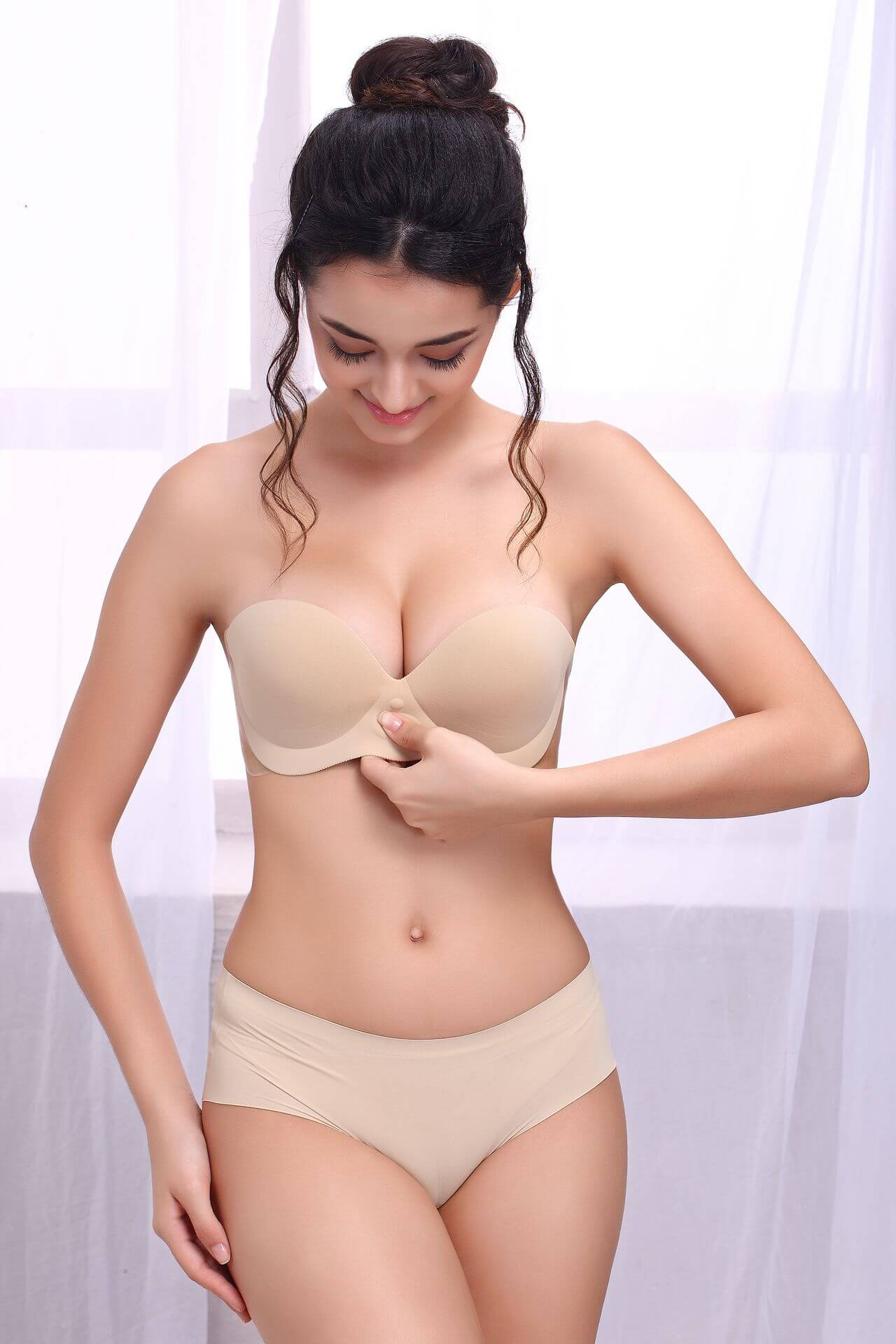
Sticky bra: also called an adhesive bra, stick-on bra, or backless/strapless bra, is a molded cup, typically medical-grade silicone gel or a strong fabric-backed adhesive, that bonds directly to bare skin around and beneath the breast for lift and coverage, with no straps, no band, and no clasp.
What Is a Sticky Bra, Exactly?
A sticky bra is a cup-shaped piece of lingerie coated on one side with a reusable adhesive that sticks directly to bare skin instead of relying on straps or a band. Most are made from medical-grade silicone gel, though some budget versions use a fabric backing with an adhesive layer laminated on top.
People reach for a sticky bra when a neckline, a backless dress, or a strapless top would otherwise show a strap or band. It’s closely related to boob tape, another backless-support option, but a sticky bra is pre-molded into a cup shape rather than a flat strip, so it gives more consistent lift without the trial-and-error of taping a pattern yourself.
If you’re weighing a silicone cup against your usual band-and-cup size, our bra size calculator can help you translate your measurements into the closest fit, and our guide to wearing a backless dress without a bra covers the other support options worth considering alongside it.
Why Does a Sticky Bra Stop Sticking?
A sticky bra stops sticking almost always because of what’s on it, not what’s wrong with it. Body oil, lotion, sunscreen, sweat, and everyday dust settle into the adhesive every time you wear it, and that film sits between the silicone and your skin the next time you try to put it on. Body oil and lotion residue block an adhesive bra’s grip more than normal wear ever does.
A lot of advice floating around suggests wiping the adhesive with rubbing alcohol or acetone to “reactivate” it, or blasting it with a hairdryer to loosen it up. Both of those tend to make the problem worse, not better: alcohol and acetone are solvents that break down silicone adhesive with repeated use, and direct heat can warp the cup’s shape or cook the adhesive until it turns gummy. Removing the buildup that’s actually blocking the stick, through a proper wash, is what restores grip.
A sticky bra losing its grip almost never means the adhesive is dead. It usually just means the bra is dirty.
How Do You Clean a Sticky Bra?
You clean a sticky bra by hand-washing it in lukewarm water with a small amount of mild, fragrance-free soap, gently rubbing the adhesive with your fingertips, then rinsing thoroughly and air-drying it flat.
Fill a small basin or your sink with lukewarm water, not hot, since heat is one of the fastest ways to degrade silicone adhesive. Add a drop of mild soap or a gentle detergent made for delicates and swirl it until it’s just barely sudsy; you don’t need much. Submerge the cup and use your fingertips to rub the adhesive side in small circles, paying extra attention to any patches that look dull or grimy. Skip your fingernails and skip anything abrasive like a scrub brush or an old toothbrush, since either can scratch the silicone and leave rough spots that collect dirt faster next time.
Rinse the cup under cool running water until every trace of soap is gone. Leftover soap film is just as effective at killing stickiness as body oil is, so this step matters more than people expect. Gently press out excess water with a clean, lint-free cloth rather than wringing or twisting the cup, which can distort its shape.
Wash it on its own. A peer-reviewed review of laundering practices notes that hand-washing delicate items in a shared sink or basin can cross-contaminate multiple items when they’re washed together, and that hand-washed items don’t reach the higher water temperatures a washing machine does (Abney et al., 2021, Applied and Environmental Microbiology). Washing your sticky bra by itself, rather than tossed in with other hand-washables, avoids picking up lint and residue from other fabric.
Can You Machine Wash a Sticky Bra?
No. Machine washing and machine drying are two of the fastest ways to ruin a sticky bra.
A washing machine’s agitation twists and creases the cup, and it exposes the adhesive to lint from every other item in the load, which sticks to the surface and is genuinely difficult to remove once it’s embedded. Detergent residue from a full machine cycle is also harder to rinse away than what you’d use in a small hand wash, and any soap left behind interferes with the adhesive the same way body oil does. A dryer’s heat is worse still: it can warp the silicone’s shape permanently and cook the adhesive layer until it turns gummy, brittle, or unevenly sticky. Hand-washing takes a few extra minutes, but it’s the only method that keeps the cup shape and the adhesive intact.
How Do You Make a Sticky Bra Sticky Again?
Making a sticky bra sticky again is the same process as cleaning it properly. There’s no separate reactivating product you need to buy.
Once the oil, lotion, and dust buildup is washed off and the cup is completely dry, the adhesive typically bonds to skin the same way it did when the bra was new. A full, gentle wash restores an adhesive bra’s grip more reliably than any spray-on reactivator or alcohol wipe. Some people try adding baby powder, hairspray, or an extra strip of tape over a tired adhesive; none of these are real fixes, and they tend to leave a residue behind that makes the next wash harder, not easier.
If the cup still won’t hold after a proper wash and a full, complete air-dry, the adhesive itself has likely reached the end of its usable life. That’s a sign to retire it, not a sign to scrub harder or reach for a stronger solvent.
There’s no special reactivating spray you need. Making it sticky again is the same process as cleaning it.
How Should You Store a Sticky Bra Between Wears?
Storing a sticky bra well is mostly about protecting the adhesive from dust and pressure. Cover the sticky side with its original plastic liner, or a clean plastic sheet if the liner is lost, every time you put it away. Store it flat rather than folded, since creasing the adhesive against itself can cause it to stick to the wrong surface and tear when separated.
Keep it in a cool, dry, dust-free spot, away from direct sunlight, radiators, or a sunny windowsill; heat and UV exposure both shorten adhesive life. It’s also worth storing it away from your other bras and clothing so it doesn’t pick up lint or fibers before its next wear.
How Long Does a Sticky Bra Last?
How long a sticky bra lasts depends more on how it’s cleaned and stored than on how many times you’ve technically worn it.
Manufacturers commonly frame an adhesive bra’s lifespan in terms of a number of wears rather than a set number of months, and that number varies quite a bit by brand and adhesive type, so it’s worth checking the specific product’s packaging rather than assuming a universal figure applies. Washing it after every wear and storing it properly usually gets more mileage out of a sticky bra than skipping washes to try to “save” the adhesive; buildup accelerates wear, it doesn’t prevent it. When a freshly washed, fully dry bra still won’t hold, that’s the reliable sign it’s done.
For a broader look at how to tell when any bra has reached the end of its useful life, our article on replacing your bras regularly walks through the general signs.
How Do You Put On a Sticky Bra So It Actually Stays?
How you apply a sticky bra affects both how well it holds that day and how long the adhesive lasts overall. Skin needs to be clean, dry, and completely free of lotion, oil, or sunscreen before you apply it; showering first and letting your skin air-dry fully gives the best bond.
Peel the protective liner off right before you apply the cup, not in advance, so the adhesive isn’t exposed to air and dust any longer than necessary. Press firmly from the center of the cup outward toward the edges rather than pressing the whole surface down at once; this pushes out trapped air pockets, which are one of the most common reasons a sticky bra starts lifting at the edges partway through the day. Give it a minute to fully bond before getting dressed on top of it.
When it’s time to take it off, peel slowly from one edge rather than pulling it away quickly. Removing it too fast, especially once the adhesive has fully set, is what tends to leave a residue mark on skin and can stretch the silicone out of shape.
Sticky Bra Cleaning Methods Compared
Not every cleaning method that shows up in a search result is safe for an adhesive bra. Here’s how the common approaches stack up.
| Method | What It Does | Effect on the Adhesive | Recommended? |
| Hand wash: lukewarm water + mild soap | Removes body oil, lotion, sweat, and dust buildup | Preserves the adhesive and restores stick | Yes, after every wear |
| Quick rinse or damp wipe, water only | Clears light surface dust | Doesn’t fully remove oil or soap-free grime | Fine between full washes, not a substitute |
| Rubbing alcohol or acetone wipe | Strips oils quickly | Breaks down silicone adhesive with repeated use | No |
| Machine wash | Agitates and rinses like regular laundry | Creases the cup, attracts lint, hard to fully rinse | No |
| Machine or heat-gun drying | Speeds up drying time | Can warp the cup and overheat the adhesive | No |
Is Your Sticky Bra Bothering Your Skin?
A little redness or a faint adhesive line right after you peel a sticky bra off is common and usually fades within an hour or two, similar to the mark a bandage leaves. That’s a normal, temporary response to adhesive contact, not a reason to stop using the product.
Persistent redness, itching, small bumps, or pain is a different situation, and it’s not something to push through. If irritation shows up repeatedly or doesn’t fade quickly, stop wearing that particular bra and check in with a doctor or dermatologist rather than trying to troubleshoot it yourself. Giving your skin adhesive-free days between wears, and never applying a sticky bra over broken, freshly shaved, or freshly waxed skin, both reduce the chances of irritation in the first place.
If sensitivity is an ongoing issue for you, our guide to the best bra materials for sensitive skin covers gentler options, including where silicone tends to compare favorably to fabric-tape adhesives for people prone to reactions.
Getting the Most Out of Your Sticky Bra
Cleaning a sticky bra is a five-minute habit, not a chore to catch up on later. Make it part of taking the bra off, rinse, gentle rub, thorough rinse, air-dry flat, cover, and store, and you’ll get more consistent stick out of it wear after wear.
Its lifespan will always be finite. That’s normal for the product, not a sign you’re doing something wrong or bought a bad one.
For general habits that extend the life of any bra in your rotation, our guide to caring for and prolonging the life of your bras and our overview of washing, drying, and storing bras both apply well beyond adhesive styles. And once a sticky bra is truly done, our guide on properly disposing of old bras covers how to retire it responsibly.
Frequently Asked Questions
Can you wash a sticky bra in the washing machine?
No. Machine washing and machine drying are the two fastest ways to ruin the adhesive and warp the cup’s shape. Hand-washing in lukewarm water with mild soap is the only method that reliably keeps a sticky bra usable long-term.
How often should you wash a sticky bra?
Wash it after every single wear, even if you only had it on for an hour. Body oil and sweat start affecting the adhesive’s grip well before it’s visibly dirty, so waiting until it looks grimy means you’re already wearing it past its best stick.
Why isn’t my sticky bra sticking anymore, even after I washed it?
If it’s been cleaned properly and given a full, complete air-dry and it still won’t hold, the adhesive has most likely reached the end of its usable life rather than needing a different cleaning method. Every adhesive bra has a limited number of wears in it, and no amount of extra scrubbing brings a spent adhesive back.
Can you reuse a sticky bra, or is it meant for one wear?
Most sticky bras sold as reusable are designed for repeated wear over a number of uses, not a single occasion, as long as they’re cleaned and stored correctly between wears. Check the specific product’s packaging, though, since some budget or novelty versions are genuinely marketed as single-use and won’t hold up to washing.
What should you do if a sticky bra irritates your skin?
Mild redness or a faint line that fades within an hour or two after removal is a normal, temporary response and not a cause for concern. Persistent redness, itching, bumps, or pain is different: stop wearing that bra and talk to a doctor or dermatologist rather than continuing to use it through discomfort.


