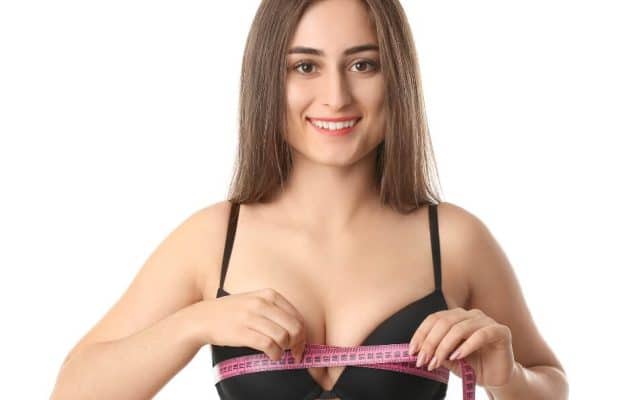
The Best Bras for Plus-Sized Women: What to Look For in Fit and Features
Summarize this blog post with:


Copy the Gemini prompt manually
If the band rides up your back by lunchtime, the straps leave grooves in your shoulders, or the cups hold a shape you never asked for, the bra is doing the wrong job for your body. Many of those problems come from a mismatch between the size on the tag and the way the bra is built.
A bra for a fuller frame depends on a few mechanical details, such as band width, hook count, cup depth, and strap placement. Once you know which of them matters most for you, shopping gets quicker and the returns pile shrinks. This guide covers those details, how to read a size chart without getting caught by UK and US letters, and how to match each fit problem to the feature that addresses it. If you’d like a starting size first, the bra size calculator takes a minute.
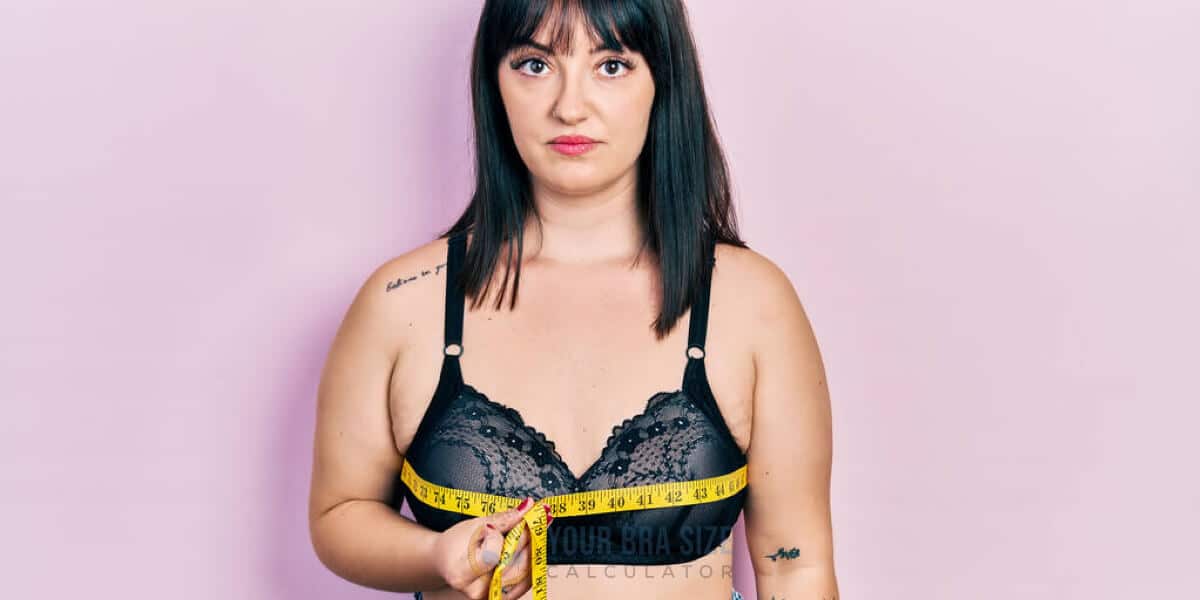
Key Takeaways
- Plus size can mean a larger band, a larger cup, or both, and each one points to a different set of features to look for first.
- The band anchors the whole bra, so a level, firm band with several hook columns comes before cup shape or strap style.
- A cup letter is not a fixed volume, and UK and US letters drift apart after DD, so count cup steps above D when you compare brands.
- Wide, vertical straps spread pressure more comfortably than thin or crossed ones, according to one small laboratory study of women with large breasts.
- Match each symptom, such as a rising band or digging straps, to the feature that addresses it, then confirm with a try-on.
- Pain that continues after the fit looks right is a question for your doctor or a certified fitter.
What counts as a plus-size bra?
A plus-size bra is one made for a band size, a cup size, or both that sits beyond the range most mainstream stores carry, and retailers draw that line in different places. The label therefore tells you less than your own measurements do.
Plus-size bra: a bra sold in an extended band range, an extended cup range, or both, usually built with a wider band, more hook columns, and deeper cup construction to support a larger frame or bust.
The useful question is where your plus sits. A wider torso with a mid-range cup, a smaller frame with a fuller bust, and a larger band paired with a larger cup are three different fitting problems, and the table below shows what to prioritize for each. Sister sizing, which means going up a band size and down a cup size (or the reverse) to keep the cup volume close, becomes useful for all three profiles once you start trying things on.
| Where the plus is | What it usually looks like | What to prioritize first |
| Band | A wider torso with a cup in the mid range | A firm, wide band with several hook columns and a smooth back panel |
| Cup | A smaller or mid-size frame with a fuller bust | Cup depth, side support, and straps set to carry load without digging |
| Both | A larger band paired with a larger cup | Both sets of features, plus a brand whose chart covers your full band and cup range |
If the cup is the bigger part of your situation, the large-breasts fitting guide covers cup-specific problems in more depth.
Why does the band matter so much on a larger frame?
The band anchors the bra to your torso, and a band that sits level and stays put leaves the cups and straps with far less strain. A band that creeps up your back lets the cups tilt and pushes the load onto your shoulders, which is why a strap problem is often a band problem in disguise.
Start with a snug underbust measurement taken parallel to the floor, using the steps in the guide to measuring your bra size at home. Treat that number as a starting point for a try-on, since adding a fixed number of inches to an underbust measurement is a rule of thumb, and it lands differently across body shapes and brands.
Hooks matter because a wider band with several hook columns spreads the grip over more of your back, and it leaves room to tighten the band as the elastic relaxes. Fasten a new bra on the loosest hook so the tighter settings stay available later. If the band feels loose on its tightest hook while the cups fit, try one band size down and one cup size up. That is sister sizing, and it is general guidance rather than a guaranteed match, since brands cut their cups differently.
How does cup volume relate to body size?
Cup volume tends to rise with body mass index, so a fuller frame often comes with a larger cup, although breast size varies widely at every weight. BMI and the distance from the notch at the base of the throat to the nipple together explained about half the variation in breast mass among 93 women, according to Brown and colleagues (2012, American Journal of Human Biology).
Breast volume in overweight and obese women was two to three times that of women with a normal BMI, according to Coltman, Steele and McGhee (2017, Ergonomics), a 3D-scanning study of 356 women whose breast volumes ranged from 48 to 3,100 mL.
For shopping, the practical point is that one cup letter covers a wide range of volumes. A cup grows with the band in most size systems, so a 40D holds more than a 32D, and two bras with the same label can still feel different from brand to brand. Weight changes can move both band and cup, so a size that worked two years ago deserves a fresh check.
How do you read a plus-size chart without getting tripped up by UK and US letters?
Count the cup steps above D instead of trusting the letter, because UK and US cup labels drift apart after DD and no single standard sets the US sequence. A UK F and a US F can land a cup apart, depending on the brand.
The table below shows common patterns, built by counting cup steps above D. Some brands skip letters or use their own sequence, so treat it as general guidance and check the brand’s own chart. Bands are simpler: UK and US band numbers match, and EU numbers rise by 5 for every 2 band sizes, so 38 is 85, 42 is 95, 46 is 105, and 50 is 115 (an approximation based on about 5 cm for every 2 inches).
| Steps above D | Common UK label | US labels you may see |
| 1 | DD | DD or E |
| 2 | E | DDD or F |
| 3 | F | F or G |
| 4 | FF | G or H |
| 5 | G | H or I |
| 6 | GG | I or J |
Our guide to converting sizes for international brands goes further into how the systems differ.
The letter on a cup tells you where to start looking, and the try-on is where you find out whether that volume suits you.
Which features hold a larger bust comfortably?
A fuller bust sits most comfortably in a firm band, cups deep enough to contain all the breast tissue, and straps wide enough to spread pressure over the shoulder. Each feature takes load off the next one, so a weak link in any of them shows up somewhere else on your body.
Vertical straps produced less discomfort than cross-back straps, and straps about 4.5 cm wide were recommended to limit pressure and discomfort, according to Coltman, McGhee and Steele (2015, Sports Medicine – Open), a laboratory study of 23 active women with D+ cups wearing sports bras.
That study used sports bras, so it applies most directly to active wear, though the idea of spreading load across a wider strap likely carries over to everyday bras. Beyond straps, look for cups that enclose the breast without a bulge at the edge, a center panel that rests flat against your breastbone, and an underwire that sits on the chest wall behind the breast tissue instead of on it. Side panels with some firmness help keep tissue from drifting toward the underarm. The checklist in how to tell if your bra fits correctly walks through each of these in the mirror.
Which bra styles suit a fuller figure?
Styles such as full-coverage, balconette, wireless, and strapless can all work at larger sizes when the construction matches your fit needs, so the best choice depends on your neckline, your comfort preference, and how much structure you want.
A full coverage bra encloses the breast, which suits you if tissue spills over the top or side of a lower-cut cup. Balconette cuts sit lower at the neckline and lift from underneath, and they work best when the cups have enough depth and the straps sit toward the outer edge.
Wire-free bras can be comfortable at larger sizes when the seams, band, and cup structure supply the support a wire would otherwise provide. Some women prefer the separation a wire gives, so trying both in the same size shows which one keeps your band level. Strapless bras ask the band to do all the work, so look for a wide band with boning and a silicone grip, and choose the size by band first.
For exercise, an encapsulation sports bra, which gives each breast its own cup, with wide and firm straps is a sensible place to start, and our guide to wearing a properly fitted sports bra explains what to check.
A good bra for a fuller frame often looks plain on the hanger, because the work happens in the band, the seams, and the straps.
How do you match a fit problem to a feature?
The table below pairs common problems with what they often mean and which feature to look for. These are general fit patterns rather than diagnoses, and a size or style that fixes a problem in one brand may behave differently in another.
| What you notice | What it often means | Feature to look for |
| Band rides up your back | The band is loose, or the cups are too small and pull it upward | A smaller band with a larger cup, or a firmer band with more hook columns |
| Straps dig into your shoulders | The straps are carrying load the band should carry | Resize or tighten the band first, then choose wider, padded straps |
| Tissue spills over the cup | Cup volume or shape is too small | The next cup size up, or a full-coverage cut |
| Gap at the top of the cup | The cup is too large, or its shape doesn’t match yours | A smaller cup, or a stretch-lace upper cup |
| Underwire rests on tissue | The cup is too small, or the wire is too narrow | A larger cup or a wider-set wire |
| Bulge above or below the band | The band is too tight, or too narrow to spread pressure | A wider back panel with smooth edges |
If pain continues after the fit looks right, or you notice changes that worry you, talk to your doctor or a certified fitter.
Why is a good fit harder to find, and how do you shop around it?
Finding a well-fitting bra gets harder as breast size rises in at least one survey, so it pays to shop with a plan for trying sizes and returning what doesn’t work.
Each one-size increase in breast size was linked to 16% lower odds of being satisfied with bra fit, even though those women had 27% higher odds of having been professionally fitted, according to Spencer and colleagues (2020, Women’s Health), a survey of 269 Australian women aged 40 to 85.
Online shopping works better when you read the brand’s own size chart before ordering, compare its band and cup range to your measurements, and order two neighboring sizes when the return policy allows it. The fabric stretch and the number of hook columns, which product photos often show, say a lot about how the band will behave.
What should you do first?
Start with the measurement that is your plus, pick the matching feature set from the first table, and try two neighboring sizes before you decide. Once a brand, style, and size work for you, saving all three in your phone makes the next purchase fast. A few tries is normal, since sizing differs by brand.
Frequently Asked Questions
What is the best bra for plus size women?
No single bra is best, because the answer depends on whether your plus is in the band, the cup, or both. A full-coverage bra with a firm multi-hook band, wide straps, and cups that contain the breast is a reasonable starting point for many larger figures. Confirm the size with a try-on, since sizing varies by brand.
What bra sizes are considered plus size?
Retailers set the line differently, with some starting at a D or DD cup and others at wider bands, so the label matters less than your measurements. If a brand’s chart covers your band and cup, you can shop it however the store categorizes it.
Are wireless bras good for plus size women?
They can be, when the band is firm, the cups are structured, and the straps are wide. Some women find wireless more comfortable, and others prefer the separation of a wire, so try both in the same size and keep the one that holds a level band without digging.
Which sports bra works best for a plus-size body?
An encapsulation style with a firm band and wide, vertical straps is a good place to start, based on the strap research above. Check that the band stays level when you move and that no breast tissue escapes at the sides or the top.
Are front-closure bras a good choice for plus size women?
Front closures can make dressing easier if reaching behind your back is awkward, and some are made with wide bands. Check that the closure lies flat under clothing and that the band is wide enough to stay level. If reaching behind your back is painful, mention it to your doctor or a certified fitter.