Choosing a Bra for Scoliosis, Kyphosis, and Other Posture Conditions
If one bra strap always slips while the other stays put, or your band creeps up your back no matter how often you tug it down, the size on the label might not be the whole story. Posture conditions, including scoliosis and kyphosis, change the shape a bra has to sit on. Most bras are patterned for a torso that matches on both sides and stands upright, so when your body doesn’t follow that template, a bra in the right size can still feel wrong.
Posture-related fit problems follow patterns. A sideways curve causes different trouble than a forward-rounded upper back, and once you know which pattern you’re working with, you can choose features on purpose.

Key Takeaways
- Scoliosis mostly causes side-to-side fit differences, such as one shoulder sitting higher, a rotated ribcage, and breasts that differ in size or height.
- Kyphosis mostly causes front-to-back fit changes: the band climbs at the back, straps slide outward, and the cups tilt downward.
- The most helpful features include wide or cushioned straps with long adjusters, a taller band with three or more hook rows, and strap layouts that pull inward, such as racerback or J-hook conversions.
- Measure in your natural, relaxed posture, choose the cup for your larger side, and adjust each strap separately.
- Posture bras can shift shoulder position slightly, but research doesn’t show they straighten a spinal curve. Treat them as comfort garments.
- New pain, a changing shoulder height, or anything that worries you is a question for your doctor, not your bra.
Why Does Scoliosis or Kyphosis Make a Bra Fit Unevenly?
A bra fits unevenly with scoliosis or kyphosis because it’s cut for a symmetrical, upright torso. When the spine curves sideways or rounds forward, the ribcage and shoulders move with it, which changes where breast tissue sits. The band, straps, and cups each land somewhere slightly different from where the pattern expects them to be.
A bra works as a system. The band anchors the bra and carries most of the breast weight, the straps stabilize the cups, and the cups hold volume, which is why band-and-cup proportion and sister sizing matter so much. A curved spine changes the surface the bra band has to grip, so a band that’s technically the right length can still sit crooked, climb, or press harder on one side.
Asymmetric fit: A fit pattern where the left and right sides of your body need different things from the same bra, such as a strap that needs to be shorter on one side, a cup that fills on one side and gapes on the other, or a band that sits level on one side and climbs on the other.
Most bra-and-posture advice asks whether a poorly fitted bra affects your posture. This guide works in the other direction: the posture comes first, and the question is how to fit a bra around it.
How Does Scoliosis Change the Way a Bra Fits?
Scoliosis changes bra fit mainly from side to side. A sideways spinal curve often sets one shoulder lower than the other, rotates the ribcage so one side of the back is more prominent, and can leave the breasts at different heights or volumes. Each change affects a different part of the bra.
Uneven shoulders
A lower shoulder leaves its bra strap slack. The path from the top of the cup, over the shoulder, and down to the band is shorter on that side, so a strap set to the same length as the other one ends up loose and slides off. The higher shoulder does the opposite: its strap has farther to travel and can feel tight or dig in. The fix is to adjust each strap on its own rather than matching them.
A rotated ribcage
Rib rotation changes where the band and underwire make contact. In a curve through the mid-back, the ribs on one side often push backward and form a prominence, sometimes called a rib hump, while the chest wall at the front can sit fuller on the opposite side. A band can feel tight over that prominence and loose elsewhere, and an underwire can rest on raised ribs on one side while floating away from the body on the other.
Breasts that differ in size or position
Uneven breasts in scoliosis were long assumed to be an illusion created by the rotated chest wall, but imaging research has found real volume differences in many cases.
66.7% of girls with significant adolescent idiopathic scoliosis (20 of 30) had a breast volume difference of 5% or more on MRI, and the left breast was larger in 65.5% of patients, according to Ramsay et al. (2014), Spine Deformity.
Some breast asymmetry is common in everyone. Scoliosis tends to combine uneven volume with uneven height and an uneven chest wall, which is why one cup may fit well while the other gapes or spills.
Most bras are built for a torso that’s the same on both sides. Fitting a curved spine means letting each side of the bra do something slightly different.
How Does Kyphosis Change the Way a Bra Fits?
Kyphosis changes bra fit mainly from front to back. When the upper back rounds forward, the back of the band tends to ride up, the straps get pulled toward the outer edges of the shoulders, and the cups tilt downward so breast tissue presses against the lower part of the cup.
The band climbs because a rounded upper back works like a slope. With each movement the band inches upward, pulling the front of the bra down with it. Rounded shoulders pull bra straps toward the outer edge of the shoulder, and from there they slide off easily. The usual causes covered in why bra straps keep falling down still apply, and forward-rolled shoulders make them worse.
At the front, the chest wall angles downward. The center gore, the small panel between the cups, may lift away from the breastbone, and the lower cup may feel crowded while the upper edge gaps. That usually points to a cup shape that doesn’t match the angle of your chest rather than a wrong size.
20% to 40% of older adults are estimated to have hyperkyphosis, according to Kado, Prenovost and Crandall (2007), Annals of Internal Medicine. The authors noted there are no uniform diagnostic criteria, which is why the estimate is a range.
Postural rounding eases when you sit up tall, while structural kyphosis, including forms linked to bone changes with age, stays the same however you stand. In both cases, fit the bra in the posture you spend your day in, since a bra that only fits when you stand unusually straight won’t fit most of the time.
What About Other Posture Patterns?
Other posture patterns, such as rounded shoulders, forward head posture, and an increased lower-back arch (lordosis), affect fit in smaller but recognizable ways. Rounded shoulders and forward head posture load the top of the shoulders, so narrow straps tend to dig and leave marks near the neck, a problem covered in bra fit and neck pain. A pronounced lower-back arch rarely moves a standard band, but longline bras can bunch at the waist.
The table below matches each pattern to its likely cause and the features worth looking for.
| Posture pattern | What you notice | Why it happens | Features that help |
| Scoliosis: uneven shoulders | One strap slips, the other digs | Strap path is shorter over the lower shoulder and longer over the higher one | Long, independent strap adjusters; racerback or J-hook conversion |
| Scoliosis: rotated ribcage | Band or wire presses on one side and floats on the other | Rib prominence changes where the band and wire make contact | Wire-free or flexible wire; wider, softer band; stretch side panels |
| Scoliosis: breast asymmetry | One cup fits, the other gapes or spills | Breasts differ in volume or height | Fit to the larger side; removable pad on the smaller side; stretch-lace upper cup |
| Kyphosis: rounded upper back | Band rides up at the back | Band slides up the slope of the curved upper back | Taller band with three or more hook rows; firmer band; short longline |
| Kyphosis: forward shoulders | Straps slide outward and fall | Shoulder tips roll forward and out | Closer-set straps; racerback or cross-back; center-pull straps |
| Kyphosis: downward-tilted chest | Tissue crowds the lower cup; center gore lifts | Cups angle down with the ribcage | Full-coverage or deeper cups; soft, wire-free cups |
| Rounded shoulders or forward head | Straps dig near the neck | Straps carry extra load at the top of the shoulder | Wide, cushioned straps paired with a firm band |
Table 1. Common posture-related fit patterns, their causes, and the bra features that address them.
Which Bra Features Help Most With Posture-Related Fit Problems?
The features that help most let each side of the bra adjust independently and move load off the shoulders. Look for wide or cushioned straps with a long adjustment range, a band tall and firm enough to stay put, and a strap layout that pulls inward toward your spine instead of outward toward your arms.
Straps
Wide straps spread pressure over more of the shoulder, and adjustment range matters because short sliders can run out of room before the strap on a lower shoulder is short enough. Different layouts are compared in the different types of bra straps.
Strap geometry often solves what length can’t. Racerback and cross-back styles pull the straps toward your spine, and a J-hook or racerback clip turns many standard bras into a center-pull style. That holds the strap on a lower shoulder in place and counters the outward pull of rounded shoulders.
Band
A firm band carries more of the breast weight than the straps do. When the band is snug and stable, the straps only have to steady the cups, which takes pressure off sore shoulders. For a rounded upper back, a taller band with three or four hook rows grips more of the back and climbs less than a narrow one. If the band still rides up on the loosest hook, a sister size with a smaller band and larger cup keeps the same cup volume with a firmer anchor.
True side-by-side band adjustment is rare in mainstream bras. It shows up mostly in adaptive designs, where hook-and-loop front closures let you fasten at a slight angle. Otherwise, a softer, stretchier band conforms to an uneven ribcage better than a rigid one.
Wire and cups
Underwire isn’t off-limits, but it’s the part most likely to press on a rotated or tilted ribcage, so flexible wires or wire-free bras are worth trying. Molded cups hold a fixed shape, so any difference between your breasts shows up as a gap, while seamed cups and stretch-lace upper edges shape themselves around each breast.
A firm, well-fitted band does most of the lifting. Wider straps help, but their job is to spread the load, not to carry it.
How Should You Measure and Fit an Uneven Torso?
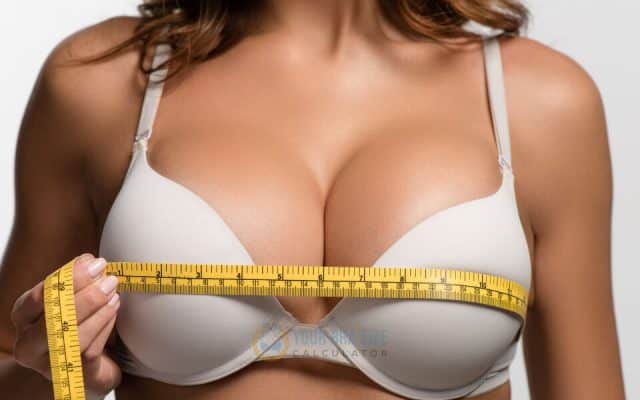
Measure in the posture you actually live in, not the posture you’d hold for a photo. Stand relaxed, keep the tape level and snug around your ribcage for the band, and then measure the fullest part of your bust. If your two sides differ, choose the cup size for the larger side and adjust the smaller side afterward.
A rotated ribcage can make the tape tilt without you noticing, so check it in a mirror sideways. Enter your numbers into the bra size calculator for a starting size, and see how to measure your bra size at home for tape technique. Posture changes how a bra behaves more than it changes your measurements, so treat the result as a starting point.
Fasten a new bra on the loosest hook and set each strap separately in your normal posture, expecting the lower-shoulder strap to need more shortening. Raise both arms and check that the band stays level, then judge each cup on its own. For fine-tuning, see how to adjust your bra to fit your body.
| Fit check | What good looks like | If it’s off, try |
| Band level | Level or slightly lower at the back; stays put when you raise your arms | A tighter hook, a firmer or taller band, or a sister size with a smaller band |
| Each strap | Stays on without digging; about one finger fits underneath | Adjust each side separately; switch to racerback or add a J-hook if it still slips |
| Larger cup | Smooth edge with no spillage at the top or sides | Go up a cup size, or choose a stretch-lace upper cup |
| Smaller cup | A small gap is fine; no wrinkling that rubs | A removable pad or insert on that side only |
| Center gore | Rests on or close to the breastbone | A different cup shape or a soft, wire-free style |
| Wire or band edge | No pressing into a rib prominence | Wire-free, a flexible wire, or a wider, softer band |
Table 2. A side-by-side fit check for asymmetric or rounded torsos.
Do Posture Bras Actually Help With Scoliosis or Kyphosis?
Posture bras can change shoulder position a little, but there’s no good evidence that they straighten a scoliosis or kyphosis curve. One controlled study found a modest shift in shoulder-blade position. That may feel supportive, but it’s a different thing from treating the spine.
6 degrees of improvement in shoulder-blade retraction was measured with a redesigned posture bra compared with an everyday bra, in a study of 24 women that included a three-month wear period, according to Jones, Mills, Exell and Wakefield-Scurr (2021), Gait & Posture.
Posture bras are comfort garments, not spinal treatments. Their crisscross backs and cushioned straps can keep straps from slipping, so wear one if you like how it feels. In a study of postmenopausal women, thoracic kyphosis and whether the bra was correctly sized showed little meaningful link with thoracic spine pain, according to Spencer and Briffa (2013), Chiropractic & Manual Therapies. Curve management belongs with your doctor or physical therapist.
What If You Wear a Scoliosis Brace?
If you wear a scoliosis brace, the bra has to work around the brace rather than against it. A soft, wire-free bra or smooth crop-style top, with no hooks, bulky seams, or hardware under the brace’s pressure points, usually causes the fewest problems. Your orthotist should have the final say, since they know where your brace applies pressure.
Back hooks under a rigid shell can press into the skin, so pull-on or front-closing styles are often easier. Check your skin for red marks where the bra and brace overlap, and mention any that don’t fade to your orthotist. Some people keep one bra for brace hours and another for off-brace time.
Many brace wearers are teens buying their first bras. There’s no single right way for a developing body to look, and the basics of bra fitting for teenagers still apply, with the brace as one more thing to fit around.
What If Pain or Limited Reach Makes Getting Dressed Hard?
If reaching behind your back is painful or limited, a front-closing bra removes the hardest step. Other options, such as pull-on styles, straps that adjust at the front, and magnetic or larger closures, also make dressing easier when your shoulders or back are stiff. Specialty bras designed for disability and mobility needs combine many of these features.
A bra can make a curved spine more comfortable, but it can’t tell you what’s happening underneath. New or worsening back pain, a shoulder that seems to be rising, or fit changes that happen quickly without a change in weight are reasons to talk to your doctor or care team.
A Bra Should Fit the Body You Have
Having a posture condition means your fit needs to be set up deliberately instead of left to chance. Once you know whether your pattern is mostly side to side, mostly front to back, or a bit of both, you can look for the features that address it: a firm, tall band, straps that adjust on each side and stay near your spine, and cups that adapt to two breasts that may not match.
Needing different settings on each side and some trial and error is normal. A well-fitted bra should feel comfortable on your shape as it is.
Frequently Asked Questions
What is the best type of bra for scoliosis?
The best bra for scoliosis is one that adjusts on each side and doesn’t press on a rotated ribcage. That usually means a wire-free or flexible-wire bra with long strap adjusters, convertible or racerback straps, and a firm band. Seamed or stretch-lace cups also handle breast asymmetry better than molded cups.
Why does one bra strap keep falling off when I have scoliosis?
The strap usually falls off the lower shoulder because that side has a shorter path over the shoulder, so the strap ends up slack. Shorten that strap on its own instead of matching it to the other side. If it still slips, a racerback style or a J-hook clip will hold it closer to your spine.
What kind of bra is best for a hunched back or kyphosis?
A bra with a taller, firm band that won’t climb the curve of your upper back is the best starting point. Pair it with straps that sit close together or cross at the back so rounded shoulders can’t pull them outward. Full-coverage or deeper cups help when the chest tilts downward.
Can a bra fix scoliosis or improve my posture?
No, a bra can’t straighten a spinal curve. Posture bras may shift shoulder position slightly and can feel supportive, but research hasn’t shown that they treat scoliosis or kyphosis. Your doctor or physical therapist is the right person for treatment decisions.
Should I buy my bra size based on my larger or smaller breast?
Choose the cup size for your larger breast so it’s fully supported without spilling. You can fill space on the smaller side with a removable pad or insert. Seamed and stretch-lace cups make this easier because they adapt to each breast’s shape.