Bra Fitting for Teenagers: Finding the Perfect Fit for Developing Bodies
A teenager’s body can change size every few months, which means the bra that fit in September might dig in, gap, or ride up by winter. That’s not a sign anything is wrong. It’s just what happens when growth spurts, hormones, and a still-developing chest all move at their own pace.
The good news is that fitting a teen for a bra doesn’t require guesswork or an awkward trip to a department store fitting room. A soft tape measure, two numbers, and a little patience with the growth curve will get you most of the way there.
This guide walks through how to measure, what a realistic size range looks like at different ages, which first-bra styles actually hold up to school days and gym class, and how to talk about the whole thing without turning it into A Big Deal.
Key Takeaways
- There’s no single ‘right’ age for a first bra. Physical signs like breast budding, tenderness, or self-consciousness in gym clothes matter more than a birthday.
- Teen bodies grow unevenly, so band and cup size can shift every few months. Plan to re-measure roughly every 3 to 6 months during active growth phases.
- The band does most of the support work, not the straps, so a snug, comfortable band matters more than cup size when picking a first bra.
- Soft-cup bralettes, wire-free training bras, and sports bras are the most forgiving first-bra styles for a body that’s still changing shape.
- Sister sizing (going down a band and up a cup, or the reverse) solves most in-between fits without buying a whole new size range.
How Do You Measure Bra Size for a Teenager?
Measuring a teenager for a bra takes two numbers: the band measurement around the ribcage and the bust measurement across the fullest part of the chest. The difference between those two numbers determines cup size.
Have her wear a soft, unpadded bra or a fitted tank top, not a hoodie or anything bulky, since loose layers will throw off both numbers.
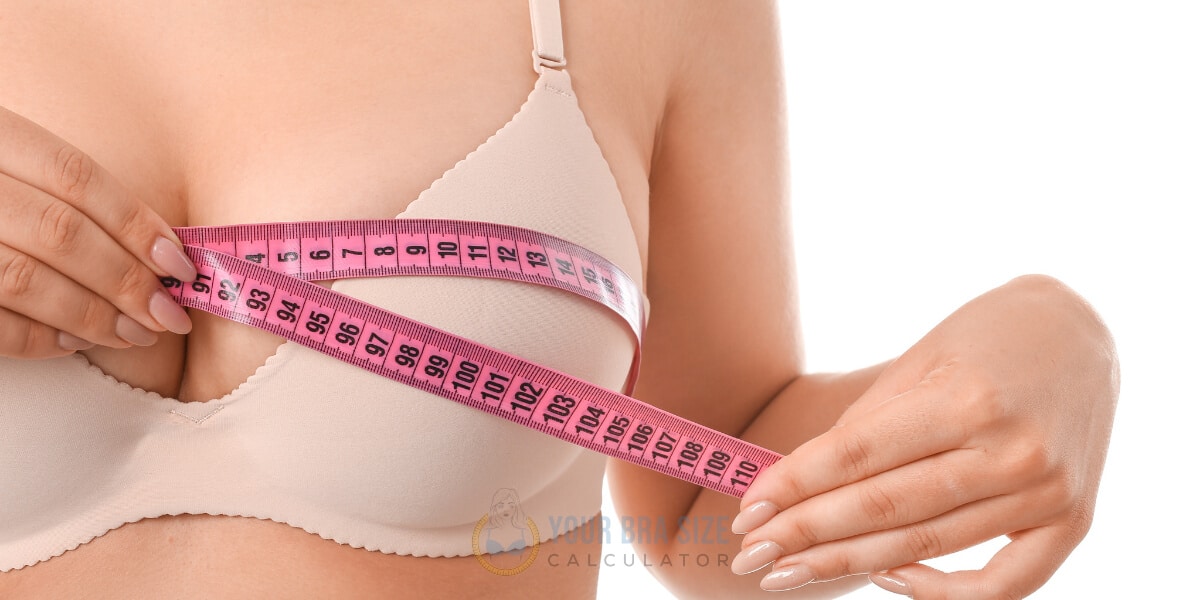
- Band: wrap a soft tape measure around the ribcage, directly under the bust, keeping it level and snug but not tight. Round to the nearest whole number.
- Bust: wrap the tape around the fullest part of the chest, keeping it parallel to the floor. Don’t pull it tight.
- Cup size: subtract the band number from the bust number. Each inch of difference equals one cup size (0″ = AA, 1″ = A, 2″ = B, 3″ = C, and so on).
A dedicated bra size calculator does this math automatically once both measurements are in hand, which is worth using if the arithmetic feels fiddly the first time around.
How Do You Know When It’s Time for a First Bra?
It’s time for a first bra when there’s a physical or comfort signal, not when a teen hits a specific age. Breast budding, soreness during activity, visible nipples through clothing, or simple self-consciousness in gym class are all valid reasons to start shopping, regardless of what age that happens to land on.
Most girls begin puberty, marked first by breast budding, between the ages of 8 and 13, and it’s common for one side to develop before the other. (American Academy of Pediatrics, HealthyChildren.org, 2019)
That range is wide on purpose. Development that starts at 9 and development that starts at 13 are both completely normal, and neither one says anything about a teen’s overall health or timeline. What matters day to day is comfort: if PE class or a school uniform is causing visible discomfort, that’s the cue to act, not a calendar date.
If breast development hasn’t started by age 13, or begins noticeably earlier than age 8, it’s worth mentioning at a routine checkup so a pediatrician can confirm everything is on track. (Cleveland Clinic, 2026)
That’s a routine check-in, not a red flag. Development timing varies enormously from one teen to the next, and a pediatrician’s role here is reassurance as much as anything else.
What Does a Teen Bra Size Chart Look Like by Age?
A teen bra size chart is only ever a starting point, since two girls of the same age can measure completely differently depending on genetics, growth stage, and body type. Use the ranges below to sanity-check a measurement, not to predict one before you’ve actually measured.
| Age range | Common band sizes | Common cup sizes |
| 10–12 | 26–30 | AA–A |
| 13–14 | 28–32 | A–B |
| 15–16 | 30–34 | B–C |
| 17–18 | 32–36 | B–D |
Notice how much the ranges overlap between age groups. A 13-year-old and a 16-year-old can both land in a 32B, and that’s not unusual, it just reflects how differently bodies develop. Treat this chart as a reality check against a measurement, never as a stand-in for one.
Age tells you almost nothing about bra size on its own. Two measurements, taken correctly, tell you everything.
Sister sizing: a fit trick where moving down one band size and up one cup size (or the reverse) keeps the same cup volume in a different band feel. It’s especially useful for teens whose band and cup needs are changing at different rates, since it solves an in-between fit without a full size change.
What Type of First Bra Is Best for a Teenager?
The best first bra for most teenagers is a soft, wire-free style, since a still-developing chest doesn’t need structured underwire support yet, and rigid cups are more likely to dig in or feel wrong as shape changes week to week.
- Bralettes: stretchy, wire-free, and forgiving of growth. A good starting point for teens who are just beginning to notice breast development. See the full case for bralettes if comfort is the top priority.
- Wire-free training bras: light structure with a defined cup, good for teens who want more coverage under fitted shirts without the rigidity of underwire.
- Sports bras: useful for PE class and after-school activities regardless of cup size, since movement control matters more than volume at this stage. A properly fitted sports bra also helps normalize the idea of a bra as functional rather than a big milestone.
Underwire isn’t off-limits for teens, but there’s rarely a reason to reach for it before the cup size has stabilized for a few months. It’s one more variable to get wrong while the body is still changing shape.
What Are the Most Common Bra Fit Problems in Teens?
The most common fit problems in teen bras trace back to buying a size a parent or teen expects to grow into, rather than the size that fits right now. An oversized band and cup causes more discomfort than a slightly snug one that gets replaced sooner.
| Symptom | Likely fix |
| Band rides up the back | Band is too loose; go down one band size and consider a sister size to keep the same cup volume. |
| Straps dig into shoulders | The band, not the straps, should carry most of the weight; tighten or resize the band before adjusting straps. |
| Cups gap at the top | Cup is too big for current development; try a smaller cup or a soft, unstructured style instead. |
| Underwire pokes or presses | Skip underwire for now; a wire-free bralette or training bra removes the pressure point entirely. |
For more detail on any one of these, the guide to adjusting bra straps and the breakdown of common gaping, spillage, and slipping issues both apply just as well to teen bodies as adult ones.
How Often Should a Teen’s Bra Size Be Re-Measured?
A teen’s bra size should be re-checked roughly every 3 to 6 months during active growth, and immediately if a bra starts leaving marks, riding up, or feeling loose within a few weeks of buying it. Growth spurts don’t announce themselves, so the bra itself is often the first signal that something has shifted.
This mirrors the general guidance around how often to get a bra fitting, just on a faster timeline, since adult bodies change far more slowly than teen ones.
How Do You Talk About Bras Without Making It Awkward?
The easiest way to talk about a first bra is to treat it as a practical, low-key errand rather than a milestone conversation. Mentioning it casually, alongside picking up other clothes or supplies, tends to land better than a dedicated sit-down talk.
If an in-person fitting feels like too much too soon, measuring at home with a soft tape measure and ordering online keeps the whole process private and pressure-free. Either path is completely valid, and there’s no correct order or pace for a teen to move through this.
The goal isn’t a perfect first fitting. It’s a comfortable one, and a system for adjusting when the next size shift happens.
How Should Teens Care for Their First Bras?
Teen bras hold their shape longest with hand washing or a mesh laundry bag on a gentle cycle, since machine drying and rough agitation break down elastic faster than anything else. That’s true for a $8 bralette just as much as it is for a $50 one.
The full bra washing and storage routine applies here too: rotate between two or three bras so elastic gets time to recover, skip the dryer, and lay flat to dry.
Getting a Good Fit Doesn’t Have to Be Complicated
A first bra fitting isn’t a one-and-done event. It’s the first of many re-measurements a teen’s body will need over the next few years, and that’s completely normal, not a sign anything was done wrong the first time.
Start with an accurate measurement, pick a soft, forgiving style, and plan to check the fit again in a few months. That’s the whole system, and it works just as well for a first bra as it does for the tenth one.
Frequently Asked Questions
What size bra does the average 13-year-old wear?
Many 13-year-olds fall somewhere between a 28AA and a 32B, but the range is wide and depends entirely on individual development. Measuring band and bust directly gives a far more reliable answer than any age-based estimate.
Is it normal for one breast to be bigger than the other?
Yes, asymmetry during development is common and usually evens out over time. If it’s noticeably uneven and causing fit problems, a soft, unstructured bralette tends to accommodate the difference better than a structured cup.
Should a teen get measured in a store or at home?
Either works well. A store fitting offers a second opinion and hands-on adjustment, while measuring at home keeps the process private and low-pressure. Neither is more accurate than the other as long as the measuring technique is correct.
How many bras does a teenager actually need?
Two or three in rotation is usually enough: one for everyday wear, one for gym or sports, and a backup while the others are being washed. Buying a full wardrobe of one size isn’t practical given how quickly teen sizing shifts.
Does underwire hurt a developing chest?
There’s no medical evidence that underwire itself causes harm, but a poor-fitting underwire, especially one that’s too small, can dig in or feel uncomfortable during a growth phase. Wire-free styles simply sidestep that risk while sizing is still in flux.