How to Tighten a Bra Band Without Sewing (No Needle Required)
Your bra band rides up in the back by lunchtime, no matter how many times you tug it down. Your straps start digging into your shoulders because they’re carrying weight that was never meant to be theirs. That’s not a strap problem. It’s a band that has stopped doing its job, and fixing it doesn’t require a needle, a sewing machine, or a trip back to the store.
Key Takeaways
- A loose bra band is the most common reason straps slide and cups gape, since the band carries most of a bra’s support.
- You can tighten a bra band without sewing using a tighter hook column, a no-sew band tightener clip, a safety pin gather, or an elastic loop.
- A bra extender makes a band longer, not shorter. It solves the opposite problem: a band that’s too tight, not too loose.
- If a band is stretched out past its last hook column, it’s usually time to size down the band and go up one cup, rather than keep patching it.
- A band that’s too tight isn’t the fix either. Research links overly tight underbands to a higher work of breathing during exercise.
What Does It Mean When a Bra Band Is Too Loose?
A bra band is too loose when it no longer sits snug and level around your ribcage without help from the straps. You’ll feel it as constant tugging: pulling the band down in front, hiking it up in back, or resetting your straps every hour because they’re stretched to their last notch. A band that’s lost its grip shifts the job of holding your bust in place from your ribcage, which is stable, to your shoulders, which weren’t built for it. That’s why straps that felt perfectly fine a year ago can suddenly start digging in without you ever touching the strap length.
Band riding up: when the back of a bra travels upward toward the shoulder blades during wear instead of sitting level and horizontal around the ribcage. It usually signals a band that has stretched past its size, or one that was sized too big from the start.
This is closely tied to bra fit issues like gaping and slipping straps, since a loose band and a wandering strap are almost always the same underlying problem showing up in two places.
How Tight Should a Bra Band Actually Fit?
A bra band should sit snug and level around your entire ribcage, front and back, with just enough give to slide two fingers underneath. If you can pinch an inch of slack away from your skin, or if the band climbs higher in back than in front, it’s too loose. The band should be doing the heavy lifting here, not the straps, which is why fitters usually check band tension before they touch a single strap adjustment. Try the bra on its loosest hook column first. If it already feels snug there, you have room to tighten as the band stretches with wear; if it’s loose even on the tightest hooks, no amount of adjusting will fix it and you need a genuinely smaller band.
Why Do Bra Bands Stretch Out in the First Place?
Bra bands loosen because the elastane woven through the fabric relaxes with heat, tension, and repeated washing. Every time you stretch the band to put the bra on and take it off, the elastic fibers lose a little bit of their spring back, and heat from hot water or a dryer speeds that process up considerably. This is normal wear, not a sign you bought the wrong size, though a band that started out too big will hit this stretched-out point much faster.
A textile engineering study on garment elastic bands found that a loss of more than 10 percent in stretch force after just three washes was enough to keep the band from returning to a snug fit (Mashaly & Hussein, Alexandria Engineering Journal, 2011). That’s a small number of washes to lose meaningful elasticity, which is part of why bands loosen faster than most people expect.
Washing and drying habits make a real difference here. If you want the fuller picture on care that actually slows this down, our guide on how to make a bra last longer through proper storing and washing walks through it step by step.
How Do You Tighten a Bra Band Using the Hook Columns?
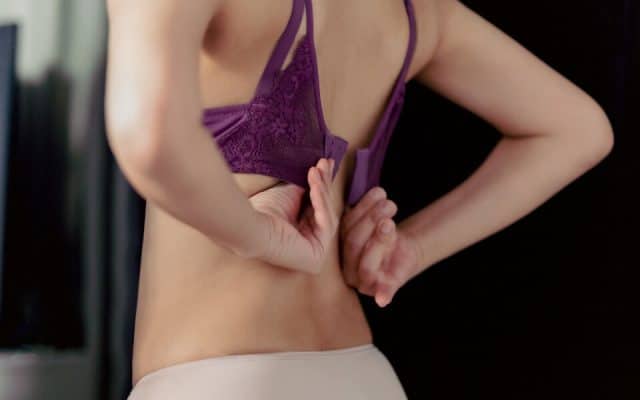
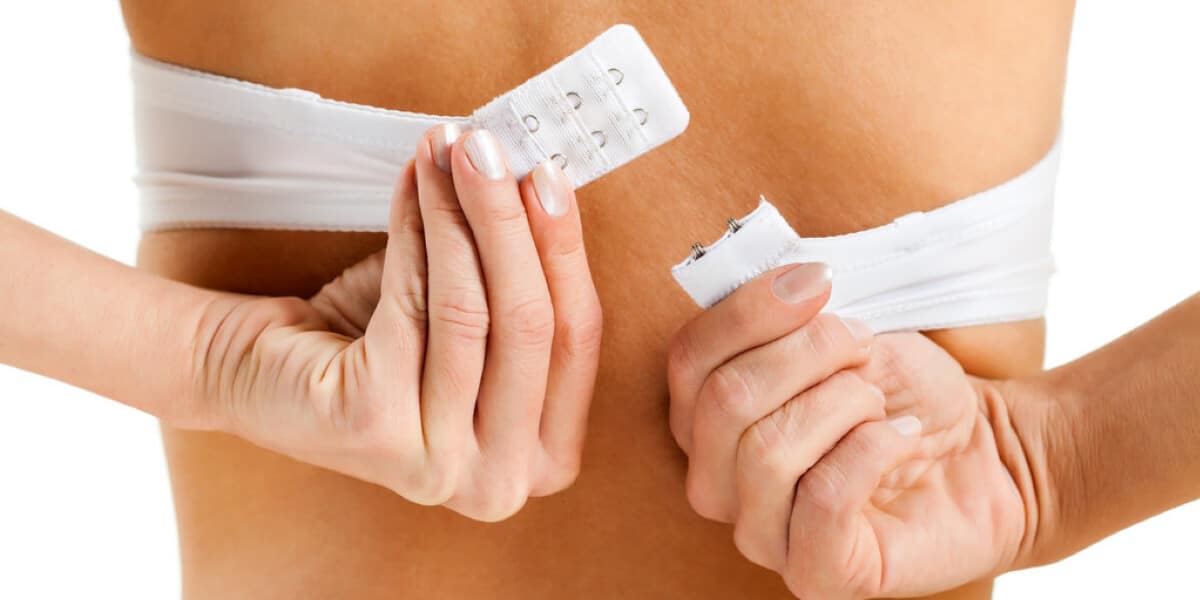
Moving to a tighter hook column is the fastest, most reliable way to tighten a bra band without sewing, and it costs nothing. Most bras come with two or three columns of hooks and eyes precisely so the band can be adjusted as it stretches with wear. Start on the loosest column when a bra is new, then move inward one column at a time as the elastic relaxes, which buys you months of continued snug fit from the same bra.
If a hook has bent, lost its grip, or a bra only came with one column to begin with, it helps to know how to fix bent, broken, or loose bra hooks before you assume the whole bra needs replacing.
Can You Use a Bra Extender to Tighten a Band?
No, a bra extender adds length to a band, which makes it looser, not tighter. This is one of the most common mix-ups in bra fit advice: an extender is a strip of extra hook-and-eye columns that clips onto your existing band to give it more room, which is exactly backward from what you want when a band has become too loose. Extenders genuinely help when a band is too tight, such as during pregnancy, after weight gain, or when you’re wearing a bra on its very last hook and it still feels restrictive. If your problem is a band that’s slipping and riding up, an extender will make that worse, not better.
What No-Sew Methods Actually Tighten a Loose Band?
A handful of no-sew methods genuinely shorten a stretched-out band, ranging from purpose-made clips to household items you probably already own. Each works a little differently, and some are sturdier long-term fixes than others, so it helps to know which one fits your situation before you commit to any single approach.
- Band tightener clip: a small clip-on device that attaches at the hook-and-eye area and works like a reverse extender, shortening the span between hooks instead of lengthening it. It’s adjustable, reusable across bras, and the sturdiest of the no-sew options.
- Safety pin gather: pinch a small fold of excess band fabric between the hooks and the side seam and secure it with a safety pin on the inside, where it won’t show through clothing. It’s a quick fix, not a permanent one.
- Elastic loop or hair tie: loop a small hair elastic through the last hook and around the first eye to close the gap by a partial size. This works best for very small adjustments, not a band that’s stretched out significantly.
- Fabric strip padding: attach a folded strip of soft fabric to the inside of the band with fabric tape or a fashion clip to take up slack. It’s the gentlest option for sensitive skin, but the least durable through a full day of wear.
| Method | How It Works | Best For | Durability |
| Band tightener clip | Reverse extender that shortens the hook-and-eye span | A band stretched several washes past new | Reusable, all-day |
| Safety pin gather | Pins a fold of excess band out of sight | A quick fix before you leave the house | A few wears |
| Elastic loop | Closes a small gap between the last hook and eye | Minor, partial-size adjustments | Several wears |
| Fabric strip padding | Adds soft bulk inside the band to take up slack | Sensitive skin, temporary relief | One wear |
| Move a hook column | Uses the bra’s built-in tighter setting | Any bra with unused inner columns | Permanent until re-adjusted |
When Should You Just Go Down a Band Size Instead?
It’s time to size down the band, not patch it, once a bra is loose even on its tightest hook column. When that happens, the fix isn’t another gadget, it’s sister sizing: dropping one band size while going up one cup size to keep the same cup volume. This keeps the part of the bra that actually fit you well, the cup, while correcting the part that didn’t, the band, which is a much more reliable outcome than layering multiple no-sew fixes onto a band that’s fundamentally the wrong size.
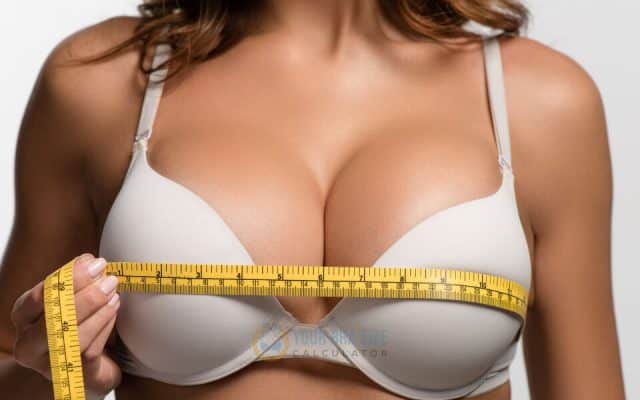
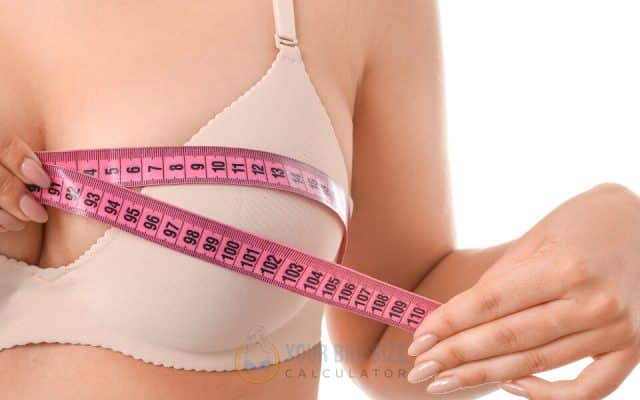
If you’re not sure where your band and cup numbers actually land right now, it’s worth re-checking both with our guide to calculating your band and bust size, or running fresh measurements through the bra size calculator directly, since band elastic that’s stretched can throw off a self-assessment done by feel alone.
| If Your Current Size Is | Try This Sister Size | What Changes |
| 34C | 32D | Band tightens one size, cup volume stays the same |
| 36D | 34DD/E | Band tightens one size, cup volume stays the same |
| 32B | 30C | Band tightens one size, cup volume stays the same |
| 38DD/E | 36E/F | Band tightens one size, cup volume stays the same |
Fit still varies by brand and style, so treat this table as a starting point for trying sizes on rather than a guarantee. A band and cup that measure correctly on paper can still feel different from one manufacturer to the next.
Can a Bra Band Be Too Tight? What Happens Then?
Yes, a band can absolutely be tightened too far, and overcorrecting brings its own problems. A band that digs into skin, leaves deep marks that don’t fade quickly, or makes it harder to take a full breath has gone past snug into restrictive. The goal is a band that stays put without you having to fight it, not one pulled to its tightest possible setting.
A 2024 study of trained runners published in Medicine & Science in Sports & Exercise found that an overly tight sports bra underband increased the mechanical work of breathing and raised oxygen consumption during running compared with a properly fitted band, and eased when the underband was loosened (Kipp et al., 2024).
That study looked specifically at running in sports bras, but the underlying point holds for everyday bras too: snug is the goal, not vice-tight. If a band leaves you short of breath, aching under the ribs, or leaving marks that stay red for more than a few minutes after you take it off, that’s worth a conversation with a certified fitter or your doctor rather than something to push through.
How Do You Know When It’s Time to Replace the Bra Instead of Tightening It?
A bra is due for replacement once you’ve run out of hook columns and no-sew fix still leaves it loose within an hour of putting it on. Repeated tightening tricks can bridge a gap for a while, but they’re a stopgap, not a long-term solution once the elastic itself has given out.
In a study of 104 women assessed against professional bra-fitting criteria, 85 percent were found to be wearing a bra that didn’t match their measured size, with band fit a key factor in the mismatch (McGhee & Steele, Journal of Science and Medicine in Sport, 2010). It’s a useful reminder to re-measure periodically rather than assume the size on your last tag is still the size you are.
For a sense of how often that check-in should happen, and what a genuinely worn-out bra looks like compared to one that just needs a column change, our guide on how often to get a bra fitting and our piece on the importance of replacing your bras regularly both go into more detail.
A Quick Gut Check Before You Reach for a Fix
“The band should be doing the work quietly. If you notice it, adjust it. If you’re still noticing it after adjusting it, it’s not you, it’s the band.”
That’s really the test for every method above. A safety pin or a tightener clip is a good bridge while you figure out your next bra purchase, but none of them should be doing permanent duty on a band that’s fundamentally worn out.
“A stretched band isn’t a bra that failed you. It’s a bra that did its job for as long as its elastic could.”
The Bottom Line on a Loose Band
A loose bra band is one of the most fixable problems in your lingerie drawer, whether that means moving a hook column tonight, ordering a tightener clip for a few dollars, or finally trying the sister size you’ve been putting off. None of it requires a needle, a skill you don’t have, or a bra you love ending up in the donation pile before its time. Start with the free fix, the hook columns, and work your way down this list only if you need to.
Frequently Asked Questions
How do you tighten a bra band without sewing?
Move to a tighter hook column first, since most bras are built with that adjustment in mind and it costs nothing. If the band is loose even on its tightest column, a no-sew band tightener clip, a safety pin gather, or an elastic loop can shorten it further, though these work best as a bridge rather than a permanent fix.
Does a bra extender make the band tighter?
No, a bra extender adds length and makes a band looser, not tighter. It’s meant for a band that’s too small or has become restrictive, such as during pregnancy or weight changes, so using one on an already loose band will only make the fit worse.
How tight should a bra band feel?
A properly fitted band sits snug and level around your entire ribcage, front and back, with enough give to slide two fingers underneath comfortably. It should hold most of the bra’s support on its own, without your straps having to compensate for a band that’s slipping.
Can a tight bra band cause discomfort or affect breathing?
A band pulled too tight can dig into skin, leave lasting marks, and make deep breathing harder, and research on sports bras has linked overly tight underbands to a measurably higher effort of breathing during exercise. If tightening leaves you short of breath or in ongoing discomfort, that’s a sign to loosen it and talk to a certified fitter or your doctor rather than push through.
How do you stop a bra band from riding up in the back?
A band that rides up in back is almost always too loose or was sized too big from the start, so tightening the hook column is the first thing to try. If it still climbs after that adjustment, the band size itself is likely too big, and sizing down the band while going up a cup will usually solve it for good.