How to Fix Bra Hooks (Bent, Broken, or Loose)
One hook snaps off in the wash and a bra you’ve worn for two years suddenly feels unwearable. Or the metal eye has gone soft and misshapen, so the band won’t sit flat no matter how hard you squeeze it closed. Bra hooks absorb more daily tension than almost any other part of the garment, and they’re usually the first thing to fail, long before the fabric or the underwire gives out.
The good news is that fixing one is a fifteen minute job, not a reason to retire a bra that still fits you well. Here’s how to sew in a replacement, reshape bent metal, work around a missing hook until you can get to it properly, and figure out when repair stops making sense.
Key Takeaways
- A broken hook can usually be sewn in with a needle, thread, and a replacement hook-and-eye set from a craft or sewing store.
- Bent hooks can often be reshaped with pliers rather than replaced outright.
- A hook that keeps coming undone is frequently a band-fit problem, not a hardware problem.
- Bra extenders and a few other no-sew tricks work as a short-term fix when you need the bra wearable right away.
- Metal hooks can irritate sensitive skin, and switching to plastic or coated hooks solves this for most people.
- Repairing a bra you already fit well into is almost always faster and cheaper than replacing it.
Hook-and-eye closure: the two-part fastening system on most bra bands, made up of metal or plastic hooks on one wing and matching loops, or “eyes,” on the other. Multiple rows of hooks let you tighten the band gradually as the elastic stretches with wear.
Why Do Bra Hooks Break or Bend in the First Place?
Bra hooks fail because they take on repeated mechanical stress that almost nothing else on the garment does. Every time you hook and unhook the band, the metal flexes slightly, and that flexing adds up over months of daily wear. Repeated bending fatigues the metal until it eventually snaps or loses its shape, the same way a paperclip weakens the more you fold it back and forth.
Washing machines make this worse. A bra tumbling loose in a regular wash cycle lets the hooks catch on other fabric, other hooks, or the drum itself, which is the most common reason hooks end up bent rather than broken outright. Plastic hooks have a different failure point: they get brittle with age and with repeated dryer heat, so they crack rather than bend. Either way, the fix depends on which type of failure you’re dealing with, and both are usually repairable rather than a reason to buy a new bra.
What Tools Do You Need to Fix a Bra Hook?
A sewing needle, thread that matches your bra’s color, small sharp scissors, and a replacement hook-and-eye set cover most repairs. Craft stores and fabric shops sell these sets pre-made in a few standard widths, so bring the damaged piece with you or measure it beforehand rather than guessing. For bent hooks you’ll want a pair of small needle-nose pliers instead of sewing supplies, and a seam ripper makes removing the old, damaged hook far cleaner than trying to cut it free with scissors alone.
How Do You Sew a Replacement Hook Onto a Bra?
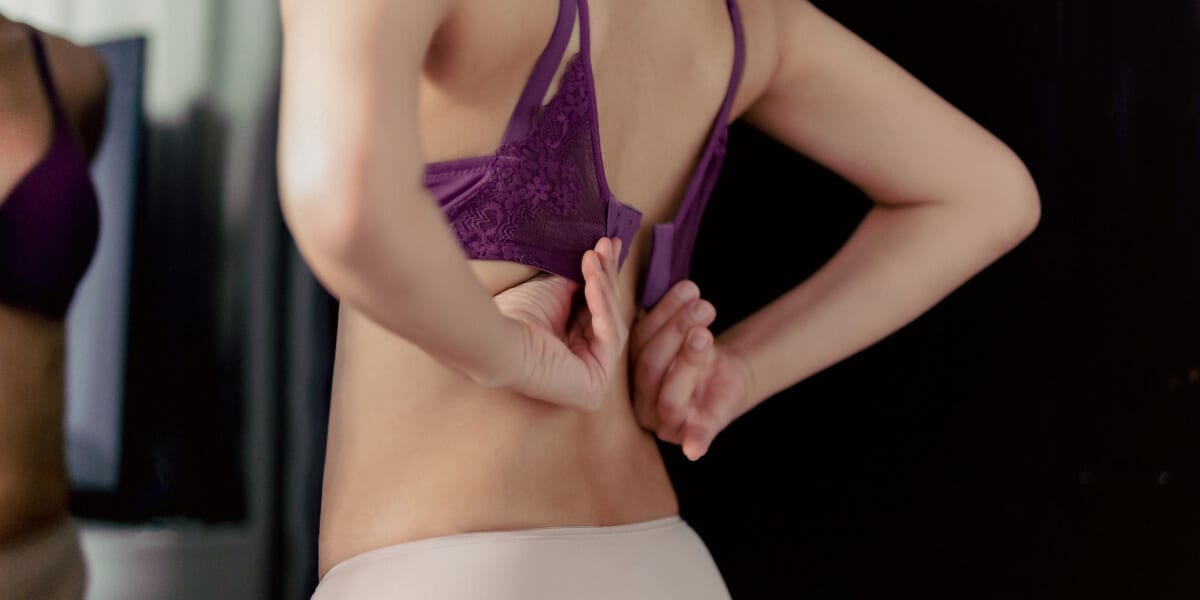
Start by using a seam ripper to carefully open the stitching around the damaged hook, working slowly so you don’t nick the surrounding fabric. Once the old hook is free, pull away any leftover thread so you have a clean edge to work with. Position the new hook exactly where the old one sat, tucked between the fabric layers so the raw edge stays hidden, and pin it in place before you start sewing.
Thread your needle with a length of thread around ten to twelve inches, knot the end, and backstitch through the mounting holes on the hook several times for a secure hold. Sew both holes on each hook rather than just one, since a single stitch point is exactly where the repair will fail again first. Knot off the thread, trim the excess close to the fabric, and test the closure a few times before wearing the bra to make sure the new hook lines up cleanly with its matching eye.
Repairing a hook you already fit well into is almost always faster than shopping for a replacement bra in the exact same size.
How Do You Fix a Bent Bra Hook Without Sewing?
A bent hook that hasn’t cracked or snapped can usually be reshaped rather than replaced. Grip the bent section gently with needle-nose pliers and ease it back toward its original curve in small increments, checking the fit against the matching eye after each adjustment rather than trying to correct it in one motion.
Bent metal remembers being bent, so working slowly matters here. Reshaping the same spot repeatedly over many wash cycles weakens the metal further, and eventually it will crack rather than flex back into place. If a hook has already been reshaped once or twice and is starting to feel stiff or brittle when you bend it, that’s the point where sewing in a fresh replacement makes more sense than reshaping it again.
Why Does a Bra Hook Keep Coming Undone?
A hook that pops open on its own during the day is usually telling you something about the band, not the hardware. If the overall band is too loose for your size, the constant outward tension from your ribcage pulls the hooks apart even when they’re perfectly intact, because there’s no slack left in the closure to absorb that pull. Checking your band size against a bra size calculator and moving to a tighter column of hooks is often a faster fix than replacing anything.
The other common cause is a stretched or worn eye loop, where the fabric or thread holding the eye has loosened enough that the hook no longer catches securely. This tends to happen gradually on bras you’ve worn for a long time, and it’s a quick sewing fix: reinforce or replace the eye side of the closure the same way you’d replace a hook.
A hook that won’t stay closed is often the band asking for a tighter size, not a hardware defect.
Is There a No-Sew Way to Fix a Broken Bra Hook?
When you need the bra wearable right away and don’t have time to sew, a bra extender is the most reliable no-sew workaround. It clips onto your existing hooks on one side and adds a fresh set of hooks and eyes on the other, which works even if the original closure is completely missing rather than just damaged. This is the same accessory people reach for when they need extra room in the band, so it’s worth keeping one on hand alongside the tips in how to make a bra band tighter without sewing.
Fabric-safe fusible bonding tape can hold a hook in place temporarily in a pinch, but treat it as a same-day fix rather than a lasting one. It doesn’t hold up to washing, and it’s not a substitute for stitching the hook in properly once you have ten minutes to sit down with a needle and thread.
Why Do Metal Bra Hooks Irritate Your Skin?
Metal hooks, particularly nickel-plated ones, sit against skin for hours at a time in a warm, slightly damp environment, which is exactly the kind of prolonged contact that triggers a reaction in people with a nickel sensitivity. Nickel contact allergy affects roughly 17% of young women, according to a review by Torres, Melo, and Tosti (2009) in Clinical, Cosmetic and Investigational Dermatology, which makes it one of the more common triggers behind unexplained redness or itching along the back band.
Nickel contact allergy affects roughly 17% of young women, according to Torres, Melo, and Tosti (2009), published in Clinical, Cosmetic and Investigational Dermatology. Read the study.
If a hook has always felt itchy or left a mark, replacing it with a plastic or nickel-free coated hook usually resolves it without needing to replace the whole bra. Fabric choice plays a role here too, so it’s worth pairing that swap with a look at the best bra materials for sensitive skin if irritation shows up in more than just the hook area.
How Many Rows of Hooks Does Your Bra Need?
More rows of hooks generally mean more adjustability and more support, which is why bands built for larger busts or fuller figures tend to carry three or four rows instead of the two most standard bras use. The table below is a general guide to matching hook rows with band support.
| Hook Rows | Typical Band Support | Best For |
| 1 row | Minimal adjustment room | Bralettes and lightly structured styles |
| 2 rows | Standard adjustment as elastic stretches over time | Most everyday underwire and wire-free bras |
| 3 rows | Extra reinforcement for a snugger, more stable band | Fuller busts and higher-support styles |
| 4 rows | Maximum adjustability and band stability | Plus-size and specialty support bras |
Repair or Replace? How to Decide
If the band still fits well and only the hook has failed, repairing it is nearly always the better call. Beyond the time and cost saved, keeping a well-fitted bra in rotation longer has a real environmental upside: extending a garment’s active life by just nine months can cut its carbon, water, and waste footprint by 20 to 30%, according to research from WRAP (the Waste and Resources Action Programme).
Extending a garment’s active life by nine months can cut its carbon, water, and waste footprint by 20 to 30%, according to WRAP. Read the research.
| Method | Time Needed | Best For |
| Sew in a replacement hook | 10 to 15 minutes | Broken, cracked, or missing hooks |
| Reshape with pliers | 2 to 5 minutes | Bent metal hooks that haven’t cracked |
| Bra extender | Under a minute | A same-day fix when you can’t sew right now |
| Professional tailor or seamstress | A few days, drop-off | Delicate fabrics or repairs you’d rather not DIY |
If the band itself has lost its stretch, or you’ve already resized the hooks as far as they’ll go and it still runs loose, that’s a sign the bra has reached the end of its useful life rather than a hook problem. How to care for and prolong the life of your bras covers how to get the most wear out of the ones you keep, and the importance of replacing your bras regularly walks through the signs that a bra is truly done, so you’re not repairing hardware on a bra that’s past saving.
How Do You Prevent Bra Hooks From Bending in the Wash?
Always hook the band closed before washing, even on a bra you’re about to toss in the machine. A closed hook has nowhere to catch on other fabric, while an open one snags easily and comes out bent. A mesh lingerie bag adds another layer of protection by keeping the bra separate from zippers, buttons, and other hardware that can bend hooks on contact. For the full routine, bra care basics for washing, drying, and storing covers water temperature and drying methods that protect both the elastic and the hardware.
The Bottom Line on Bra Hooks
A damaged hook is one of the easiest bra problems to fix, and it’s rarely a reason to give up on a bra that otherwise fits you well. Sew in a replacement, ease a bent one back into shape, or clip on an extender to buy yourself time, and you’ll usually have the bra back in rotation the same day. If you’re dealing with straps or band issues alongside the hook, why your bra straps keep falling down and how to fix gaping, spillage, or slipping straps are worth a look too, since fit problems tend to travel together.
Frequently Asked Questions
Can I fix a bra hook without sewing?
Yes, for a short-term fix. A bra extender clips onto the existing hooks and adds a fresh closure, and it works even if the original hook is missing entirely. It’s a good stopgap, but sewing in a proper replacement is still the more lasting repair.
Why does my bra hook keep coming undone?
Most often the band is too loose for your current size, so tension keeps pulling the hooks apart. Checking your band measurement and moving to a tighter row of hooks solves this more often than replacing the hardware does.
Will any replacement hook fit my bra?
Replacement hook-and-eye sets come in a few standard widths, so bring the damaged piece with you when shopping or measure it beforehand. Matching the width and the number of rows keeps the repair looking close to the original.
Is it worth repairing an old bra, or should I just replace it?
If the band still fits and only the hook is damaged, repairing it is almost always the faster, cheaper option. If the elastic itself has lost its stretch even at the tightest row of hooks, that’s a sign the bra has reached the end of its life regardless of the hook.
Why do my bra hooks irritate my skin?
Metal hooks, especially nickel-plated ones, are a common trigger for contact irritation since they sit against skin for hours at a time. Switching to a plastic or nickel-free coated hook usually clears it up without needing to replace the entire bra.