Does Your Bra Size Actually Change When You Gain or Lose Weight?
Your bra used to fit perfectly. Now the band rides up before lunch, the straps dig grooves into your shoulders by mid-afternoon, or the cups gap in a way that makes no sense since nothing about your routine has changed. Somewhere along the way your weight shifted, a little or a lot, and your bra never got the memo.
That mismatch is normal, and there’s a real, fairly predictable pattern behind it once you know what to look for.
Key Takeaways
- Weight change does affect bra size, but the band and cup usually shift at different rates, not together.
- Band size tracks the circumference of your rib cage, so it tends to respond to weight change first and most noticeably.
- Cup size depends on how much of your weight change actually reaches breast tissue, and that varies enormously from person to person.
- Breasts are made mostly of fat, glandular tissue, and connective tissue, and the ratio between them determines how much your cup size moves.
- Rapid, large weight changes tend to affect fit more noticeably than slow, gradual ones.
- If your bra feels off, remeasuring is the fastest fix, no matter how much weight actually changed.
Does Your Bra Size Change When You Gain or Lose Weight?
Yes, your bra size can change when you gain or lose weight, though rarely in the neat, symmetrical way most people expect. Weight change moves two separate measurements that make up a bra size: the band, which is based on rib cage circumference, and the cup, which is based on breast volume relative to that band. Because those two measurements respond to weight differently, a bra that fit at one weight can miss on the band, the cup, or both once your weight settles somewhere new.
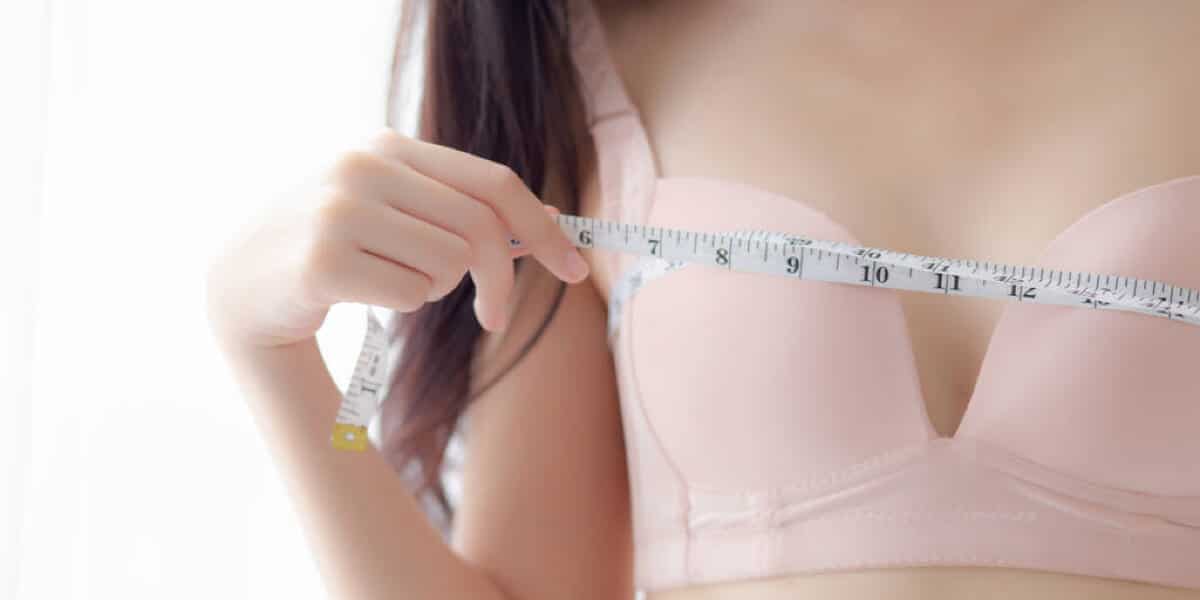
This is also why measuring again, rather than guessing at a size up or down, gets you to the right fit faster. Running your new numbers through the bra size calculator takes a few minutes and accounts for both measurements at once, instead of assuming they moved together.
Why Does Weight Change Affect Breast Size in the First Place?
Breast size changes with body weight because breasts are made mostly of fat, along with glandular and connective tissue, and fat is the tissue most directly affected by weight change. Fat tissue expands and contracts with body weight, while glandular tissue stays comparatively stable regardless of what the scale says, which is why the two most common outcomes, noticeable cup change or almost none at all, both happen regularly and both count as normal.
A peer-reviewed anatomical study analyzing breast tissue from mastectomy specimens found that the proportion of fat within breast tissue ranged from as little as 7 percent to as much as 56 percent of total breast volume, depending on the individual (Vandeweyer & Hertens, Annals of Anatomy, 2002). That range explains why two women who lose the exact same amount of weight can see very different changes in cup size.
Someone whose breasts lean more toward fat will typically notice more shrinkage or growth as weight shifts, while someone with a higher proportion of glandular tissue may barely see a change in cup size at all, even after a significant weight change.
Does Your Band Size or Cup Size Change First?
In most cases, the band changes before the cup does. Band size is essentially a rib cage measurement, and rib cage circumference responds to weight change quickly and fairly predictably, since it’s made up mostly of muscle, bone, and a thin layer of surrounding tissue. Cup size takes longer to catch up because it depends on breast tissue specifically, and breast tissue doesn’t always move in lockstep with the rest of the body.
The band does most of the early work. It’s usually the first thing to feel wrong, and the last thing people think to check.
This sequencing is exactly why a bra can start to feel loose around the ribs while the cups still look about right, or why the band can dig in even though the cups still have room to spare. Learning to tell whether your bra actually fits makes it much easier to catch which measurement moved.
Is Bra Size Change the Same for Everyone?
No, not even close. How much a given amount of weight change affects your bra size depends on your individual breast composition, your age, and even genetics, not just the number on the scale.
Peer-reviewed research analyzing anthropometric data found that body mass index is a statistically significant factor in how bra band and cup sizes are distributed across a population, alongside age (Shi et al., Ergonomics, 2020).
That population-level pattern shows up individually, too, and it’s closely tied to a concept every experienced fitter relies on: sister sizing. Understanding how cup letters relate to band size makes the pattern much easier to follow.
Sister sizing refers to two bra sizes that share the same cup volume despite having different band and cup letter combinations, such as a 34C and a 36B. Understanding sister sizing explains why a cup that fit perfectly can suddenly gap or overflow the moment your band size shifts even slightly, and why checking both measurements, not just one, matters after any weight change.
Does Muscle Gain Affect Bra Size the Same Way as Fat?
Not exactly, and the distinction matters for your fit. If your weight shifted because of strength training rather than fat loss or gain, your rib cage and back muscles can change shape and size on their own, independent of what’s happening with breast tissue. Someone who has built noticeable muscle across the back and shoulders may find their band needs to go up even though their cup size hasn’t moved at all, since a more developed back changes how a band sits regardless of breast volume.
This is one more reason band and cup size don’t always move together: they respond to different parts of your body changing in different ways, and the scale alone can’t tell you which one shifted.
What Happens to Your Bra Fit When You Gain Weight?
When you gain weight, the band usually needs to loosen first, since rib cage circumference tends to expand along with overall body mass. Cup size may or may not follow, depending on how much of that weight settles into breast tissue specifically. In practice, this often shows up as straps that dig into your shoulders, a band that leaves a visible line across your back, or cups that start to spill slightly at the top or sides. Adjusting your straps can buy you a little time, but it’s not a substitute for rechecking the band itself.
What Happens to Your Bra Fit When You Lose Weight?
Weight loss tends to loosen the band first too, which is often the earliest sign that a bra needs resizing. A band that used to sit snugly on the loosest hook can suddenly need the tightest one, or start riding up in the back altogether. Cup size may shrink alongside it, stay roughly the same, or lag behind the band, which is part of why so many women end up wearing a cup that gaps or leaves empty space at the top, sometimes called quad boob when it splits breast tissue into two separate bulges.
Gradual, steady weight loss tends to affect fit less dramatically than rapid weight loss, simply because there’s more time to reassess along the way. Adjusting the fit you already have can help in the short term while you wait to see where your weight settles.
What Are the Signs Your Bra No Longer Fits?
A few consistent signs show up whether weight went up or down, and catching them early saves you from wearing an uncomfortable bra for months. If you’re already noticing one or more of these, it’s worth working through how to fix common bra fit issues rather than adjusting around them indefinitely.
| Sign | What It Usually Means | What To Do |
| Band rides up in the back | Band is too loose for your current rib cage size | Size down the band, or move to a tighter hook |
| Straps dig into shoulders | Band isn’t providing enough support, so straps compensate | Recheck band size before tightening straps further |
| Cups gap at the top or sides | Cup is too large for current breast volume | Size down the cup, or try a sister size |
| Tissue spills over the top or sides | Cup is too small for current breast volume | Size up the cup, or pair a larger band with a smaller cup |
| Band feels tight or leaves marks | Band is too small for your current rib cage size | Size up the band |
A quick at-home check can tell you more than staring in a mirror trying to decide if something looks off. Slide two fingers under the band at the center of your back; if they slip in easily with room to spare, the band has loosened. If you can’t fit even one finger comfortably, the band is too tight. For the cup, look for smooth, unbroken fabric across the breast with no gapping at the top or pinching at the sides. Either sign, on its own, is usually enough reason to remeasure rather than wait.
How Much Weight Change Does It Take to Affect Your Bra Size?
There’s no fixed number that applies to everyone, since the relationship between pounds and cup size depends on individual tissue composition, not a universal formula. A given amount of weight change affects one person’s cup size far more than it affects another’s, because breast tissue composition varies so widely between individuals. Some women notice a difference after a relatively small change, while others need a much larger shift before their bra actually stops fitting.
| Type of Change | Band | Cup | What To Do |
| Small, gradual change | Rarely changes | Rarely changes | Recheck fit if anything feels different, but don’t assume a resize is needed |
| Moderate change, gradual | Often shifts one size | May shift, may not | Remeasure both band and cup |
| Larger or rapid change | Usually shifts noticeably | Often shifts as well | Full remeasure, expect to try a few sizes |
| Weight stable, fit still off | Check other causes | Check other causes | Consider aging, hormonal changes, or an older, worn-out bra |
Should You Buy New Bras While Your Weight Is Still Changing?
If your weight is actively changing, it’s reasonable to hold off on a full wardrobe replacement until things settle, but that doesn’t mean living in an ill-fitting bra in the meantime. Bra extenders add a few inches of breathing room to a tightening band, adjustable straps buy you some flexibility in the cup, and styles with stretch fabric at the top of the cup handle small fluctuations better than rigid molded cups do.
Keeping one or two bras in a slightly different size in rotation is often more practical than repeatedly buying and returning bras every few weeks while your body finds its new normal.
How Often Should You Get Remeasured After a Weight Change?
As a general guideline, it’s worth getting remeasured any time you notice signs of an ill fit, and proactively after any significant weight change, pregnancy, or a stretch of several months without checking. Weight is just one factor that shifts bra size over time; age plays a role too, which is why periodic remeasuring matters even when your weight itself hasn’t moved much.
A bra that fit six months ago isn’t guaranteed to fit today, and that’s not a flaw in you. It’s just how bodies work.
The Bottom Line
Your body changing size isn’t a problem to fix, and neither is needing a different bra size than you did last year or last month. The band and cup rarely move together, so treat a shift in weight as a cue to remeasure both, not just guess at one new number. A few minutes with a tape measure, or a quick pass through the calculator, tells you far more than trying to eyeball it in a fitting room mirror.
Frequently Asked Questions
Will my bra size change if I lose weight?
For most women, yes, though how much depends on your individual breast tissue composition. The band almost always loosens first since it tracks rib cage size, while the cup may shrink alongside it or lag behind depending on how much of your weight loss came from breast tissue specifically.
Does bra band size change with weight gain?
Usually, yes. Band size is based on rib cage circumference, which tends to expand with weight gain, so the band is often the first part of the fit to feel tight. Cup size may or may not follow, depending on where the weight settles.
How much weight do you have to lose to change your bra size?
There’s no single number that applies to everyone, since breast tissue composition varies so much between individuals. Some women notice a difference after a relatively small change, while others need a larger shift before their bra actually stops fitting properly.
Does bra size change with age as well as weight?
Yes, age affects bra size independently of weight, through changes in skin elasticity and tissue composition over time. If your weight has stayed stable but your bra still feels off, age-related changes are worth considering too, alongside a fresh remeasure.
Should I buy a new bra before my weight has stabilized?
It’s reasonable to hold off on a full replacement wardrobe, but you don’t need to tolerate an ill-fitting bra while you wait. Extenders, adjustable straps, and styles with some stretch in the cup can bridge the gap comfortably until your weight settles and a full remeasure makes sense.