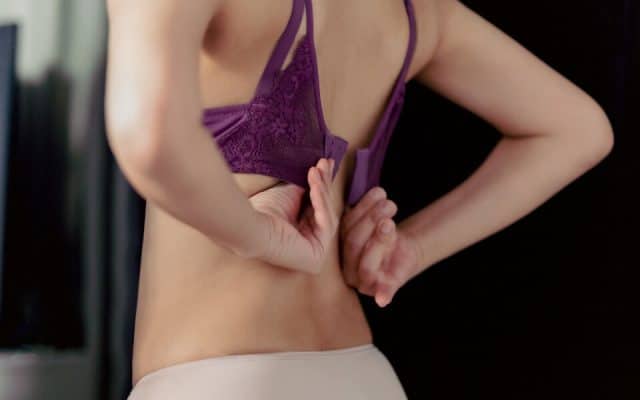
Why Do My Bra Straps Keep Falling Down?
You’ve tightened these straps twice already today, and by mid-afternoon they’re sliding down your arm again. It feels like a strap problem. Almost every time, it isn’t. Straps are only built to carry a small share of a bra’s load, so when they won’t stay put, something upstream of the strap is off: usually the band, sometimes your shoulder shape, occasionally just a bra that’s given up. Once you know which one it is, the fix takes minutes.

Key Takeaways
- A loose or stretched-out band is behind most cases of slipping straps, since the band is meant to carry most of a bra’s support
- Tightening the straps without checking the band only masks the real problem, and can leave the straps digging in
- Narrow or sloped shoulders make some strap styles slide no matter how well the rest of the bra fits
- Wider, vertically set straps put less pressure on the shoulder and slip less than narrow, angled ones, according to lab testing
- Elastic wears out, so a bra that fit fine a year ago can start slipping even at its tightest strap setting
- A strap clip, converter, or racerback conversion fixes the symptom fast, but resizing the band fixes the cause
What’s Actually Making Your Straps Slip?
Bra straps fall down for one of four reasons: the band is too big, your shoulders are narrow or sloped, the strap elastic has stretched out, or the strap style is a poor match for your body. A properly fitted band should sit snug and level around your ribcage, doing most of the work of holding the bra in place; the straps are there to stabilize the cups and fine-tune fit, not to bear your bust’s full weight. When the band can’t do its job, the straps take on load they were never built for, and slipping is the result.
Most people assume the straps themselves are broken or badly designed, when the band is actually the more common culprit. Objective fit research backs this up.
Researchers assessed 24 women’s own bras against professional fitting criteria and found straps that were too loose in 50% of them, alongside bands that weren’t sitting flush against the body. The two issues showed up together far more often than not. Source: Haworth et al., 2025, published via Taylor & Francis Online (DOI: 10.1080/17543266.2025.2461460)
Is Your Band Actually Doing Its Job?
A band that’s too big is the single most common reason straps won’t stay put. If you can pull the band more than an inch or two away from your back, or if it rides up toward your shoulder blades over the course of a day, it’s too loose to anchor the straps.
Band roll-up is what fitters call it when the back of a bra’s band creeps up toward the shoulder blades during wear. It’s one of the clearest signs of an oversized band, and it’s usually the first thing to check before touching the straps at all.
Check the fit with your bra fastened on the loosest hook, since the band stretches with wear and you’ll want room to size down later. The band should sit parallel to the floor, front and back, without digging in or floating away from your ribs. If it doesn’t, sizing down the band and sizing up the cup, using the bra size calculator, usually solves strap slippage without changing anything about the straps themselves. For a full walkthrough of what a correct fit should feel like, this fit guide covers each part of the bra in turn.
The band is doing most of the work in a well-fitting bra. The straps are there to fine-tune, not to hold you up.
Do You Have Narrow or Sloped Shoulders?
Some women deal with slipping straps no matter how well the band fits, and shoulder shape is usually why. Narrow or sloped shoulders give straps less of a horizontal surface to grip, so even a snug, correctly sized bra can shed straps that are simply following gravity down a slope.
If this sounds familiar, the fix is a style change rather than a size change. Straps set closer together, cross-back or racerback styles, or convertible straps you can cross yourself all give the strap somewhere to catch instead of sliding straight off the shoulder’s edge. This guide to strap types breaks down which construction suits which shoulder shape.
Which Bra Strap Styles Actually Stay Put?
Strap orientation and width both measurably change how much a strap slips and how much it presses into the shoulder. Laboratory testing on women with larger busts compared strap orientations and widths directly.
Vertically set straps caused significantly less discomfort than cross-back straps, and wider straps, around 4.5 centimeters, produced the lowest pressure and discomfort scores of any design tested. Source: Coltman, McGhee & Steele, 2015, Sports Medicine – Open (DOI: 10.1186/s40798-015-0014-z)
| Strap Style | How It Helps With Slipping | Best For |
| Standard vertical | Lowest measured shoulder pressure in lab testing | Average to narrow-set shoulders |
| Wide-set (4+ cm) | Spreads load over more surface area, reducing slip | Fuller busts, all-day wear |
| Racerback / cross-back | Straps meet closer to the spine, resisting slide-off | Sloped or narrow shoulders |
| Convertible | Lets you switch to cross-back as needed | Trying multiple outfits or styles |
| Clip-on converter | Pulls existing straps together without a new bra | A quick, temporary fix |
Are Your Straps Simply Worn Out?
Elastic loses its stretch-back over time, and once it does, no amount of tightening restores it. If your straps are already at their shortest setting and still slipping, or if you’ve noticed the band losing its snap-back after washing, the elastic itself has likely reached the end of its useful life rather than needing a fit adjustment.
Most bras hold their shape for six to twelve months of regular wear, though that range depends heavily on how often the bra is worn and washed. This guide to bra lifespan walks through the specific signs that a bra is past saving, and rotating between two or three bras rather than wearing one daily is one of the simplest ways to extend that window.
How Do You Adjust Bra Straps the Right Way?
Straps should sit flush against your shoulder without digging in, and you should be able to slide two fingers underneath comfortably. Any tighter and you risk shoulder indentation; any looser and you’re back to slipping.
Adjust one strap at a time rather than both together, since it’s common and completely normal for one shoulder to sit slightly lower than the other. Pull the strap through the slider in small increments, checking the fit after each adjustment rather than guessing at the final length. If you notice grooves forming on your shoulders even after this adjustment, this guide to strap indentation covers wider straps and padding options that spread the pressure out.
| If This Is Happening | Likely Cause | Try This |
| Straps slip even after tightening | Band is too big | Size down the band, size up the cup |
| One strap slips more than the other | Uneven shoulders (very common) | Adjust each strap independently |
| Straps slip only after a few months | Elastic has worn out | Replace the bra |
| Straps dig in and still slip | Wrong strap width or placement | Try a wide-set or cross-back style |
Does a Strap Clip Actually Work?
A strap clip or converter pulls both straps toward the center of your back, mimicking a racerback without needing a new bra. It’s genuinely useful for a bra that fits everywhere else but slips at the shoulder, and it works with almost any strap style.
Treat it as a bridge rather than a permanent fix, though. If the underlying issue is a band that’s too big, a clip narrows the strap angle but doesn’t correct the support the band should be providing. For sports or high-movement activities specifically, a properly fitted sports bra with a built-in racerback or adjustable back closure tends to outperform a clip added after the fact.
When Should You Just Get Refit?
If you’ve checked the band, tried a different strap style, and confirmed the elastic isn’t worn out, and the straps are still sliding, it’s worth getting remeasured rather than continuing to troubleshoot piece by piece. Bodies change gradually, through weight shifts, activity level, or simply time, and a size that fit a year ago may no longer be the size that fits now.
This guide to identifying fit problems covers slipping straps alongside gaping and spillage, since these issues often show up together when the underlying size is off in more than one place.
Getting This Right
Slipping straps feel like a small, constant annoyance, but they’re rarely a sign that something is wrong with your body. Almost always, they’re a sign that one measurement, the band, needs a second look.
A strap that keeps sliding isn’t a flaw in your shape. It’s a mismatch between the bra and the shape you actually have, and that’s always fixable.
Frequently Asked Questions
Why does only one bra strap keep falling down?
It’s extremely common for one shoulder to sit slightly lower than the other, so one strap sliding more than its pair is usually just asymmetry rather than a fit problem. Try adjusting each strap independently instead of assuming both sides need the same length.
Will tightening my straps fix a bra that’s the wrong size?
Tightening can mask the problem temporarily, but if the band is too loose, over-tightened straps just end up carrying weight they weren’t designed for, which often leads to digging and shoulder discomfort. Checking and correcting the band size first solves the slipping without that trade-off.
Do racerback or convertible straps really stop slipping?
Yes, for narrow or sloped shoulders in particular. Straps that meet closer to the spine have less room to slide off the edge of the shoulder, and lab testing on strap orientation has found measurably lower pressure and discomfort with straps set closer together.
How tight should bra straps actually be?
You should be able to comfortably slide two fingers underneath a properly adjusted strap. Any tighter risks digging in and leaving marks; any looser and the strap has too little tension to stay in place through normal movement.
When is it time to replace a bra instead of adjusting it?
If the straps are already at their shortest setting and still slipping, or the band has lost its snap-back after washing, the elastic has likely worn out rather than needing another adjustment. Most bras hold up for six to twelve months of regular wear before reaching that point.